Synopsis: With the unexplained emergence of dungeons came a relentless onslaught of monsters that overwhelmed humanity. Even the Awakened, humans with special abilities to fight monsters, couldn’t stop the destruction of the world. In the end, only Sungin Kim, the most powerful Awakened, was left standing. Upon his death, Sungin wakes up twenty years in the past as an unassuming high school student named Soohyun Kim. He’s not sure how or why he was brought back, but he does know this is his second chance to save the world and redeem himself as a hero.
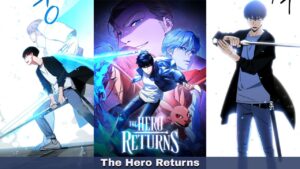
The Hero Returns (also known as 영웅, 회귀하다) is a high-tension regression dungeon crawler where Earth’s last surviving hero, Kim Sungin, watches humanity crumble under an endless monster invasion—only to wake up twenty years in the past as Kim Soohyun, an unassuming high school student with intact memories of humanity’s doomed timeline.
It’s the kind of story that grips readers who crave methodical power progression wrapped in strategic survival: a Tower of Trials where awakeners climb through infinite worlds, dungeon raids that test wit over brute force, emotional weight carried by a protagonist who spent his first life drowning in responsibility, and side characters who feel genuinely alive instead of decorative. Unlike shallow regression fantasies where the MC steamrolls everything, this one earns its momentum through well-executed fight choreography, opponents who adapt and push back, and a world structure that expands meaningfully as Soohyun ascends higher.
Where to Read The Hero Returns (Official)
If you want legitimate platforms with consistent translation quality, these are the main options:
Tapas (English Manhwa):
The English translation of The Hero Returns Manhwa is officially serialized on Tapas with updates every Friday. The manhwa adaptation is ongoing and provides a visually compelling version of the story for readers who prefer illustrated content over text.
English Novel:
Available under the title “The Hero Returns” by author B.Ain (흑아인). The novel completed serialization on July 11, 2019 with 555 main story chapters plus 41 side story chapters (21 + 20 extra chapters). Popular aggregator platforms host the most accessible English version for readers who prefer the complete narrative, but the quality may vary.
KakaoPage (Korean Manhwa):
The manhwa adaptation officially launched on KakaoPage on March 28, 2022. The webtoon serialization is ongoing and provides illustrated content for readers who prefer visual storytelling over text.
Korean Original:
The original Korean title is 영웅, 회귀하다 by author B.Ain (흑아인). The Korean novel is completed with 25 published volumes.
What The Hero Returns Is Really About
At its core, this isn’t just another “overpowered hero fixes everything” regression story—it’s a calculated survival climb where Soohyun uses his knowledge of future disasters to systematically prevent Earth’s extinction while confronting the emotional trauma that defined his first life.
Soohyun isn’t returning to passively change small events. He’s coming back to rewrite humanity’s relationship with the dungeon system, dominate the Tower of Trials before competitors realize its value, and build alliances with people who became enemies or victims in his original timeline. The story of The Hero Returns anchors itself in the Tower of Trials—a cosmic structure where each floor contains entire worlds with unique trials, mysteries, and power systems—and the dungeon invasions that threaten to annihilate humanity if awakeners can’t grow strong enough fast enough.
And importantly: Soohyun’s regression comes with psychological baggage. His first life was defined by being called “hero” while carrying impossible burdens alone, watching allies die, and ultimately failing despite sacrificing everything. He actively rejects the “hero” label in his second life, yet his actions prove he can’t escape what he fundamentally is—someone who shoulders responsibility for humanity’s survival even when it destroys him.
Why The Hero Returns Stands Out (And What Holds It Back)
A lot of regression stories promise smart MC changes fate. This one delivers differently—mostly through genuinely compelling character relationships, fight choreography that stays engaging across hundreds of chapters, and a protagonist whose internal conflicts feel earned instead of manufactured.
Exceptional Character Work and Relationships
The story shines brightest in how it handles human connections.
Soohyun’s relationship with his mother in his new body is repeatedly praised as feeling “genuine” and “like watching two real people have a conversation” rather than plot devices interacting. His trauma from his original life’s maternal relationship bleeds into his interactions with his new family, creating layered emotional dynamics that ground the fantasy elements. Supporting characters like Hak-joon, Thomas, and Rohan aren’t just cheerleaders—they have distinct personalities, agency, and their own goals that matter to the plot.
Even the villains receive meaningful characterization: boss monsters aren’t mindless destruction engines but beings with conquest goals, survival instincts, and character development across arcs. This creates stakes that feel real because opponents have motivations beyond “be evil obstacle.”
Combat That Stays Fresh and Strategic
Fight scenes maintain tension even when you know the protagonist will survive.
The author excels at choreographing battles where victories depend on strategy, positioning, and exploiting weaknesses rather than “higher stats = auto-win”. Soohyun’s limited skillset actually enhances this: instead of accumulating twenty forgettable abilities, his core skills evolve alongside him, making power progression trackable and satisfying. When he uses a technique, readers understand its mechanics and limitations, which keeps combat grounded even as power scaling increases.
Strong Pacing With Minimal Filler
The story moves briskly without dragging through unnecessary arcs.
There’s rarely a dull moment. The Tower structure creates natural progression milestones, and the author balances serious action with organic humor and character moments that prevent tone monotony. Unlike many web novels that lose momentum around chapter 200, this one maintains energy through strategic world expansion and escalating threats.
The Weaknesses of The Hero Returns
Despite its strengths, reader feedback reveals consistent pain points that can significantly impact enjoyment—especially regarding pacing shifts, character utility drop-off, and power scaling issues in later arcs.
Rough Start That Requires Investment
The first 100-150 chapters of the novel are the story’s weakest section.
Multiple people specifically warn that the writing quality drastically improves after chapter 100-150, suggesting the author “found their groove” or translation quality improved over time. Early chapters feature clunky exposition, retroactive scene descriptions (where important events are told after the fact instead of shown), and character relationships that readers are told exist without seeing them develop naturally. I recommend reading the manhwa for earlier content then jumping to the novel after to avoid the roughest patches.
Side Characters Get Left Behind
Despite strong early characterization, the power gap between Soohyun and allies widens catastrophically.
Earth-based friends like Hak-joon, Thomas, and Rohan barely have screen time after MC reaches the 60th floor. While new characters from higher tower floors appear and receive development, the lack of continued relevance for early companions frustrates readers invested in those relationships. By later arcs, supporting characters become “cheerleaders” rather than active participants, with the MC OP enough to curb stomp all enemies.
Power Scaling Loses Coherence After Floor 100
Once gods and planetary-scale threats enter the picture, the combat logic breaks down.
The scale of battle and scale of power feel mismatched once the story reaches galaxy-level conflicts. Skills are gained, merged, and replaced so rapidly that none feel important anymore, and foundational systems lose meaning entirely. Stats and levels that mattered early become arbitrary numbers, and the Achievement Store (a key early mechanic) either gets forgotten or stops being explained properly.
Romance Is Essentially Non-Existent
If you’re looking for romantic subplots, this isn’t the story for you.
The story remains laser-focused on survival, power progression, and preventing humanity’s extinction rather than developing romantic relationships. Some readers consider this a strength (no forced romance slowing momentum), while others miss the emotional dimension romance could provide.
Ending Feels Rushed and Anticlimactic
After 555 chapters of buildup, the conclusion disappoints many readers.
The final arcs are criticized for not fully exploiting thematic potential and resolving major plot threads too quickly. Mysteries that were carefully set up across hundreds of chapters either get conveniently forgotten or resolved off-screen. The emotional payoff doesn’t match the investment, leaving readers who binged to the end feeling like the journey was better than the destination.
The Hero Returns Main Character — Kim Soohyun (Previously Kim Sungin)
Kim Sungin is introduced as humanity’s strongest awakener, the lone survivor who resisted the system deletion through sheer power—only to ultimately fail and watch Earth get erased. Upon dying, he regresses twenty years into the past and wakes up as Kim Soohyun, a high school student with full memories of humanity’s doomed timeline and a singular objective: prevent extinction.
What defines Soohyun isn’t raw power but pragmatic intelligence and ruthless efficiency. He’s calculating, strategic, and doesn’t hesitate to make brutal decisions if they serve his goals. Unlike naive protagonists who trust enemies or show mercy to future threats, Soohyun stays coldly rational throughout most arcs. However, he’s not emotionless—his genuine care for his new mother creates one of the story’s most compelling emotional anchors, and his trauma from being called “hero” in his first life while shouldering impossible burdens alone adds psychological depth.
That’s why, Soohyun actively rejects the “hero” label and tries to avoid the sacrificial mentality that destroyed his first life—yet his actions repeatedly prove he can’t escape what he fundamentally is. This internal conflict between “I won’t be a hero this time” and his instinctive need to protect others drives much of his character development.
The Hero Returns Characters Guide
These are the characters and dynamics that define the story’s emotional core and strategic conflicts:
Shin Su-yeong (Soohyun’s Mother):
Soohyun’s mother works tirelessly and visits her son daily despite exhaustion. Her relationship with Soohyun is one of the most genuine parent-child dynamics in the genre, with natural conversations and emotional depth. And Soohyun’s trauma from his original life’s maternal relationship adds even more layers to their interactions.
Lee Hak-joon:
One of Soohyun’s earliest allies and friends in the new timeline. Despite limited shared history, Soohyun develops genuine bonds with him and intervenes to help during critical moments. However, like many Earth-based allies, Hak-joon’s relevance diminishes significantly after Soohyun ascends past floor 60 in the Tower.
Thomas and Rohan:
International awakeners who form a brotherhood dynamic with Soohyun and other key characters. They receive meaningful characterization and contribute actively in early-to-mid arcs, but their screen time drops dramatically once the story shifts to higher tower floors and cosmic-scale threats.
Antagonists and Boss Monsters:
Unlike typical mindless dungeon monsters, the story’s major enemies possess distinct personalities, conquest goals, and character development. This creates more engaging conflicts where victories feel earned because opponents adapt strategically rather than just scaling in raw power. I won’t spoil them as it’d be best for you to experience them yourself.
Quick Wiki (2025)
-
Korean title: 영웅, 회귀하다
-
Author: B.Ain (흑아인)
-
Original platform status: Completed with 555 main chapters + 41 side story chapters
-
Published volumes: 25 volumes (Complete)
-
Manhwa (KakaoPage): Ongoing since March 28, 2022
-
English novel: Available on WebNovel
-
Regression timeline: Soohyun returns twenty years into the past as a high school student
-
Genre tags: Regression, Dungeon System, Tower Climbing, Overpowered Protagonist, Strategic Combat, Character-Driven, Psychological Trauma, No Romance
The Hero Returns Review — Is It Worth Reading?
If you want character-driven regression fantasy with genuinely compelling relationships, strategic combat that stays engaging across hundreds of chapters, and a protagonist whose internal conflicts feel earned instead of manufactured, then The Hero Returns is absolutely worth checking out.
It delivers:
-
Exceptional character work with genuine emotional depth, particularly Soohyun’s relationship with his new mother and early allies
-
Combat choreography that remains strategic and tense even when you know the protagonist will survive
-
Brisk pacing with minimal filler and natural progression through the Tower of Trials structure
-
Villains and boss monsters with actual personalities, goals, and character development
-
A protagonist who actively rejects the “hero” label while unable to escape what he fundamentally is
But it has significant flaws:
-
The first 100-150 chapters are rough with clunky writing and retroactive storytelling that improves dramatically later
-
Side characters become increasingly irrelevant as the power gap widens, with early allies disappearing from the narrative after floor 60
-
Power scaling loses coherence after floor 100 when planetary and cosmic threats enter the picture
-
Essentially zero romance throughout the entire 555-chapter run
-
The ending feels rushed and anticlimactic despite hundreds of chapters of careful buildup
If you need consistent power scaling, don’t mind rough early chapters, and can handle side characters becoming cheerleaders in later arcs, this offers a surprisingly emotional and strategic take on the regression formula. However, readers who prioritize romance, need supporting casts to maintain relevance, or want endings that deliver satisfying payoffs may find the experience frustrating despite its strengths.
The Hero Returns FAQ
What is The Hero Returns about?
It’s a regression story where Kim Sungin, humanity’s last surviving awakener who failed to prevent Earth’s destruction, returns twenty years into the past as high school student Kim Soohyun to prevent humanity’s extinction using his knowledge of future disasters.
Is The Hero Returns a romance/harem?
No, the novel contains essentially zero romantic elements throughout its entire 555-chapter run. The focus remains on survival, strategic power progression, and preventing humanity’s extinction rather than romantic relationships.
Is Kim Soohyun an overpowered MC?
Yes, but fights stay tense because victories depend on strategy, positioning, and exploiting weaknesses rather than raw stat advantages. However, by later arcs the power gap becomes so extreme that supporting characters become irrelevant and tension decreases significantly.
How rough is the beginning?
Very rough—multiple reviews specifically warn that writing quality drastically improves after chapters 100-150. Reading the manhwa for early content then switching to the novel after the story finds its groove is the best way to enjoy this story.
Do side characters matter?
Early on, yes—supporting characters receive genuine development and contribute meaningfully to the plot. However, Earth-based allies like Hak-joon, Thomas, and Rohan lose relevance after floor 60, and by later arcs most side characters become cheerleaders rather than active participants.
How long is The Hero Returns?
The Korean novel is completed at 555 main story chapters plus 41 side story chapters (596 total) across 25 published volumes. The manhwa adaptation launched in March 2022 on KakaoPage and is ongoing with 134+ chapters as of December 2025.
Should I read The Hero Returns novel or manhwa?
The Hero Returns manhwa is still early in the story but offers better presentation for the roughest early chapters. If you want the complete narrative and can tolerate weaker writing in the first 100-150 chapters, the novel is finished. If you prefer visuals and don’t mind waiting, the manhwa provides a more polished experience for the early-to-mid story.