Synopsis: Lee Ho-Jae had given up his life as a pro gamer, until one day he received a mysterious message: “Congratulations! You’ve been invited to the Tutorial World.” Intrigued, he enters the game and confidently chooses “hell” difficulty, but soon learns that he is trapped there. With a mere 0.01% survival rate, Ho-Jae must somehow overcome the game’s agonizing challenges to figure out the real reason he was invited. This tutorial may be tough, but its secrets are what’s truly hellacious.
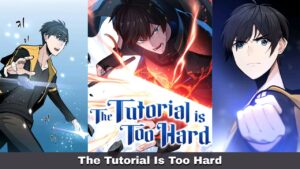
The Tutorial Is Too Hard (튜토리얼이 너무 어렵다) or ‘The Tutorial is Too Tough’ is Gandara’s fusion fantasy that transforms the “trapped in a tutorial” premise into a psychological survival story. Unlike typical dungeon crawlers where protagonists breeze through early stages, this story locks Lee Ho-Jae in Hell difficulty where every floor demands masochistic training, strategic brilliance, and the willingness to sacrifice his own humanity to survive.
The Korean web novel completed in June 2018 with 379 main chapters plus 53 side story chapters, and the manhwa adaptation launched in January 2021 with weekly updates continuing through 2025.
Where to Read The Tutorial Is Too Hard Online
Finding legitimate sources with consistent quality matters—especially for a story where translation can make or break the psychological tension.
Tapas (English manhwa)
The manhwa is officially serialized under the title “The Tutorial Is Too Tough!” with updates every Tuesday. Tapas offers the most polished English version for readers who prefer visual storytelling over text-heavy chapters.
Novel Updates (English novel)
Available as “The Tutorial Is Too Hard” by author Gandara. Translation quality fluctuates depending on the source.
Korean original
The original Korean web novel (튜토리얼이 너무 어렵다) by Gandara was first posted October 5, 2016 on Munpia, with paid serialization on Joara, Kakao Page, Ridi, and Naver Series.
What The Tutorial Is Too Hard Is Really About
At its core, this is a methodical survival story about a man trapped in a game system designed to break players—and Ho-Jae’s refusal to stay broken.
Lee Ho-Jae isn’t trying to save the world or find his destiny. He’s grinding through Hell difficulty floors because the gods won’t let him leave until he reaches Floor 100, and even then the exit conditions keep changing. The Tutorial exists to power up humans into “Awakened” defenders who protect Earth from monsters—but Hell difficulty wasn’t designed for survival, it was designed to push human limits until they shatter.
The story’s real focus is the psychological cost of that survival: Ho-Jae starts as a bored convenience store manager looking for stimulus, and transforms into something that can endure infinite pain, isolation, and self-mutilation for the sake of victory. Each floor introduces unique challenges (trap stages, puzzle stages, combat arenas, boss encounters) that force different tactical approaches rather than pure power-scaling, and the gods sponsoring players provide commentary, rewards, and occasionally interference that shapes outcomes.
Importantly: this isn’t a power fantasy where the MC dominates effortlessly. Ho-Jae suffers, fails, develops mental illness, loses his humanity piece by piece, and wins through sheer stubborn refusal to quit—even when quitting would be the sane choice.
Why The Tutorial Is Too Hard Stands Out
The story earned its cult following through psychological depth and creative floor design—but also alienates readers with structural choices that divide opinions sharply.
Amazing start with creative, brutal floor designs
The early floors (1-30) are consistently praised as the novel’s strongest content.
Each stage of The Tutorial Is Too Hard presents genuinely unique challenges: survival against overwhelming monster hordes, trap-filled puzzle rooms, boss encounters that require pattern recognition and timing rather than stat-checking, and psychological horror scenarios that test mental endurance as much as physical capability. The Hell difficulty setting means Ho-Jae can’t brute-force solutions—he has to train obsessively, study patterns, die repeatedly, and exploit every possible advantage to survive floors designed to be impossible.
Exceptional psychological portrayal of isolation and mental breakdown
The story’s greatest strength is its unflinching depiction of what Hell difficulty actually costs.
Ho-Jae doesn’t just get stronger—he develops severe depression, addiction to pain, social isolation symptoms, and personality changes that blur the line between “driven” and “insane.” The Tutorial is Too Hard novel portrays his gradual dehumanization with detail that makes readers genuinely uncomfortable, showing a protagonist who self-harms for skill upgrades, loses track of time for months, and forgets how to interact with other humans after spending years alone. This psychological realism makes victories feel earned rather than handed over.
Funny, engaging god commentary and system mechanics
The gods who watch and sponsor Tutorial participants provide genuinely entertaining interactions.
Their commentary ranges from helpful advice to sarcastic roasting to genuine concern, and the sponsorship system creates a meta-layer where gods bet on challengers, offer rewards for impressive feats, and occasionally intervene to help or hinder. This prevents the tone from becoming monotonously grim and adds levity that balances the psychological horror elements.
Strong character development for the protagonist
The protagonist of The Tutorial is Too Hard, Lee Ho-Jae, evolves from a bored convenience store manager into one of the most complex protagonists in the dungeon/system genre.
He’s smart, ruthless when necessary, willing to make terrible sacrifices, and maintains enough humanity to care about other challengers even when it complicates his survival. His background as a former pro-gamer gives him the mindset to approach Hell difficulty tactically rather than emotionally, and his character growth throughout the story—both positive and disturbing—creates genuine investment in his fate.
The Weaknesses That Break Reader Immersion
Despite exceptional early content, consistent structural and narrative problems plague the story from mid-floors through the ending.
Confusing, immersion-breaking time jumps
This is the most frequently cited dealbreaker: the story constantly jumps between “current Ho-Jae” on early floors and “future Ho-Jae” stuck on Floor 60, often without clear transition markers.
Entire chapters shift to a future timeline where Ho-Jae is massively overpowered but trapped on Floor 60 because Floors 61+ require co-op partners—then abruptly jump back to the past timeline showing how he cleared earlier floors. This creates confusion about what’s happening “now,” breaks narrative tension because readers know Ho-Jae survives to Floor 60, and disrupts emotional investment when flashback arcs are interrupted by flash-forward chapters. Readers consistently describe this as confusing as hell and breaking any immersion and suspense.
Story becomes stale and repetitive after Floor 40-50
The middle floors lose the creative spark that made early stages compelling.
Floors start feeling repetitive with less interesting challenges, and the pacing slows significantly as the author either runs out of creative ideas or pads content to extend the series. Some floors are skipped entirely in narration, while others drag on with excessive detail that isn’t engaging. The sense of danger decreases as Ho-Jae becomes increasingly overpowered, removing the tension that made earlier floors nail-biting.
MC becomes too strong, side characters become useless
By the later arcs, the power gap between Ho-Jae and everyone else widens to the point where allies are just “cheerleaders”.
The story introduces other challengers, builds potential relationships and party dynamics, then systematically removes them from relevance because Ho-Jae’s growth trajectory leaves everyone behind. This undermines the co-op premise that Floor 60+ supposedly requires and makes later interactions feel hollow when only the MC can actually contribute to challenges.
Terrible, anticlimactic ending
The final 100 chapters of The Tutorial is Too Hard novel are rushed, poorly executed, and unsatisfying.
Plot threads built up over hundreds of chapters are abandoned or resolved offscreen, the final confrontation lacks the epic scale expected after all the buildup, and the ending itself is an “open-ended cliffhanger with lots of loose ends” that resolves nothing. The side stories (53 chapters) attempt to provide closure but fail to salvage the main story’s anticlimactic resolution.
Minimal romance despite tags
The story has essentially zero romantic development.
For readers expecting romance based on genre tags, this is a complete letdown. Ho-Jae has no romantic relationships, no developing love interests, and romance is entirely absent from the narrative focus—which is fine if you expect that, but frustrating if tags or descriptions suggested otherwise.
The Tutorial Is Too Hard Main Character — Lee Ho-Jae
Lee Ho-Jae is introduced as a former top-tier pro-gamer who burned out, lost his competitive edge, and settled into managing a convenience store with his savings. His life became so boring that he drank alcohol daily searching for stimulus—until the Tutorial invitation appeared and he chose Hell difficulty purely for the challenge, instantly regretting it when the reality of 0.01% survival rate set in.
What defines Ho-Jae isn’t just his intelligence or tactical thinking from his gaming background, but his capacity to endure suffering that would break normal humans. He’s willing to self-harm for skill development, spend months in isolation without going completely insane, and make pragmatic decisions that sacrifice his own humanity for survival. Unlike naive protagonists who hesitate to kill or make hard choices, Ho-Jae understands Hell difficulty doesn’t reward mercy—it rewards results.
His character arc follows his gradual transformation from “bored human looking for stimulus” into something that operates on inhuman logic: someone who treats pain as a resource, isolation as training, and victory as the only value that matters. The psychological portrayal of this change—including his developing mental illness, medication dependency, and personality shifts—is excellent and makes him one of the most complex protagonists in the genre.
The Tutorial Is Too Hard Characters Guide
Unlike many solo-carry dungeon novels, this story introduces recurring characters who matter to the plot—even if their relevance fades as Ho-Jae’s power gap widens.
Lee Yeon-Hee
An archer who enters the Tutorial and receives guidance from Ho-Jae through the messaging system. She progresses through lower difficulty tiers while Ho-Jae is stuck on Hell difficulty Floor 60, and their communication provides one of the few human connections Ho-Jae maintains during his isolation.
Park Jung-Ah
A ruthless, fearless challenger portrayed as “a sociopath wearing the mask of justice”. She reached Floor 90, making her one of the highest-ranked challengers, and maintains contact with Ho-Jae through the Tutorial’s messaging system. Her older sister was also summoned into the Tutorial, creating complicated motivations for her survival drive.
Lee Joon-Suk
A challenger who chose to keep grinding in the Tutorial despite having the opportunity to return to the real world after clearing enough floors. His philosophy represents the opposite of Ho-Jae’s forced imprisonment: he stays voluntarily because once you leave the Tutorial, you can no longer level up or grow stronger—you’re locked at whatever power level you achieved before exiting.
The Gods
The Tutorial is observed and influenced by gods who sponsor challengers, offer rewards, and comment on performances. The God of Hope is against the system’s control and helps Ho-Jae, while various other divine entities bet on challengers, provide equipment/skills as sponsorship gifts, and occasionally intervene in Tutorial challenges. The gods create a meta-layer of narrative where Ho-Jae’s struggles entertain cosmic beings who have their own agendas and factional conflicts.
Quick Wiki (2025)
Korean title: 튜토리얼이 너무 어렵다
Author: Gandara (간다라)
Original platform status: Completed
-
Main story: 379 chapters (Completed June 29, 2018)
-
Side stories: 53 chapters (Completed November 13, 2018)
-
Total: 432 chapters
Manhwa adaptation: Ongoing; first chapter posted January 31, 2021; updates every Tuesday
English novel: Available on aggregator sites; translation quality varies
Difficulty selection: Easy, Normal, Hard, Hell (MC chose Hell)
Tutorial structure: 100 floors; clearing all floors allows return to real world as “Awakened”
Protagonist: Lee Ho-Jae, former pro-gamer turned convenience store manager
Genre tags: Dungeon, System, Psychological, Survival, Tragedy, Game Elements, Overpowered Protagonist, Mental Illness
The Tutorial Is Too Hard Review — Is It Worth Reading?
If you want a psychological survival story with creative early-floor challenges, exceptional mental illness portrayal, and a protagonist who genuinely suffers for every victory, then The Tutorial Is Too Hard is worth trying—but expect to stop reading somewhere around Floor 50-60 before the quality collapse.
It delivers:
-
Amazing early floors (1-30) with unique, brutal, creative challenges that feel genuinely impossible
-
Exceptional psychological depth showing depression, isolation, addiction, and personality deterioration
-
A smart, pragmatic MC with pro-gamer tactical thinking who isn’t naive or mercy-obsessed
-
Funny god commentary and interesting sponsorship system mechanics
-
Real tension and earned victories through masochistic training rather than plot armor
But it falls apart due to:
-
Extremely confusing time jumps between current timeline and Floor 60 future timeline that break immersion
-
Story becomes stale, repetitive, and loses creative spark after Floor 40-50
-
MC becomes so overpowered that tension disappears and side characters become irrelevant cheerleaders
-
Terrible, rushed, anticlimactic ending with abandoned plot threads and unsatisfying resolution
-
Zero romance despite some genre tags suggesting otherwise
-
Excessive grinding and “stuck in tutorial” premise becomes boring when MC can’t progress to actual story
If your tolerance for structural problems is low, or if you need satisfying endings and consistent quality throughout, you’ll likely rage-quit somewhere between chapters 150-250 of the novel. However, readers who treat this as “amazing first third, skip to ending” or who genuinely enjoy psychological breakdown narratives will find the early floors some of the best dungeon content in Korean web novels.
The consensus from long-time readers is “Read until you get bored, then stop because it won’t get better”.
The Tutorial Is Too Hard FAQ
What is The Tutorial Is Too Hard about?
It’s a survival story where former pro-gamer Lee Ho-Jae gets trapped in a Hell-difficulty Tutorial dungeon with a 0.01% survival rate, forced to grind through 100 floors while slowly losing his humanity to escape.
Does The Tutorial Is Too Hard have romance?
No—the story contains essentially zero romantic elements or love interests. The focus remains entirely on survival, psychological breakdown, and floor progression rather than relationships.
Is Lee Ho-Jae an overpowered MC?
Yes, but he earns it through masochistic training and suffering rather than plot gifts. However, by mid-story he becomes so powerful that tension decreases significantly and other characters become irrelevant.
How confusing are the time jumps?
Very confusing—the story constantly switches between “current Ho-Jae” on early floors and “future Ho-Jae” stuck on Floor 60, often without clear transitions. Many readers cite this as the most frustrating structural problem that breaks immersion.
Is the ending good?
No—the ending is widely criticized as terrible, rushed, anticlimactic, and unsatisfying with major plot threads abandoned.
How long is The Tutorial Is Too Hard?
The Korean novel completed at 432 total chapters: 379 main story plus 53 side stories. The manhwa is still ongoing as of 2025 with weekly Tuesday updates.
Should I read The Tutorial is Too Hard novel or manhwa?
The manhwa is early in adaptation and benefits from visual storytelling that clarifies confusing timeline shifts. If you want the complete story and can tolerate structural problems, the novel is finished. If you prefer polished presentation and don’t mind waiting, the manhwa offers a better experience for early-to-mid content—but will eventually hit the same quality decline the novel suffered.