Star-Embracing Swordmaster Synopsis: The so-called “Lighthouse of the North,” the prosperous trading town of Schoarra, hides a dark underbelly: seedy slums ruled by five ruthless crime bosses. When streetwise orphan Vlad finds the brothel he works for decimated by a disgraced knight, he turns to the path of the blade, pledging himself to the pursuit of power by sword. Blessed with the ability to seek wisdom from his sentient sword, Vlad embarks upon a journey of growth and peril as swordsman in service to the powerful House Vayezid.
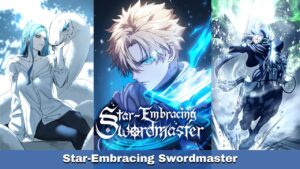
Star-Embracing Swordmaster (also known as The Stellar Swordmaster or Star-Fostered Swordmaster) is a grounded fantasy story that trades isekai tropes for gritty character-driven storytelling: Vlad, a streetwise orphan from Schoarra’s brutal slums, admires knights from afar until a mysterious bolt of black lightning awakens a voice in his head and a knight of blue moonlight shatters his back-alley existence—launching him on a journey from brothel worker to sworn blade of the powerful House Bayezid, all while navigating nobility, territorial wars, and the harsh reality that even obscure stars can shine if they dare.
It’s the kind of story that hooks readers who crave authentic zero-to-hero progression without regression gimmicks: a protagonist who earns every skill through blood, sweat, and mentorship rather than convenient reincarnation knowledge, emotionally grounded relationships where characters actually grow and hurt together instead of falling into tropey romance patterns, strategic combat that rewards training and tactical thinking over sudden power-ups, poetic narrative style that elevates fight scenes and character moments into something genuinely literary, and a refreshingly compact 285-chapter story that doesn’t overstay its welcome.
Where to Read Star-Embracing Swordmaster Online
If you want legitimate platforms with quality translations, these are the main options for accessing both Star-Embracing Swordmaster novel and manhwa formats:
Webtoons (English manhwa): Webtoon is the official English release platform offering high-quality translation of the Star-Embracing Swordmaster manhwa under the title The Stellar Swordmaster. Updates weekly.
Naver Webtoon (Official Korean manhwa): The manhwa adaptation by Hong Dae-ui (writer) and Juno (artist) is officially serialized on Naver Webtoon, with Season 2 returning in November 2025 after a hiatus.
WebNovel (English novel): Star-Embracing Swordmaster is available on WebNovel with full English translation, providing the complete 285-chapter story originally published on the Korean platform Munpia.
Other language editions: Official translations exist in Traditional Chinese (星耀劍士), Thai (ยอดนักดาบผู้โอบอุ้มดารา), and Indonesian, all available through WEBTOON’s regional platforms.
Korean original: The original Korean web novel is titled 별을 품은 소드마스터 (Byeol-eul Pum-eun So-deu-ma-seu-teo) by author Q10, completed on Munpia with 285 chapters.
What Star-Embracing Swordmaster Is Really About
At its core, this is a story where a slum-born nobody with nothing but admiration for knights gets struck by supernatural lightning, gains a mentor spirit in his sword, and claws his way from brothel errand boy to legitimate knight through sheer determination—all while navigating the brutal politics of noble houses, protecting those he cares about, and proving that even the faintest star can shine.
The protagonist of Star-Embracing Swordmaster, Vlad, isn’t trying to save the world or fulfill some grand prophecy initially. He’s a pragmatic survivor from Schoarra’s slums who watched knights from afar with yearning, worked at a brothel called Rose’s Smiles to scrape by, and dreamed of something better than back-alley poverty. When a disgraced knight destroys the brothel and a mysterious voice begins speaking to him after being struck by black lightning, Vlad’s life transforms—but not through convenient power-ups. He earns every advancement through grueling training, strategic thinking, and the mentorship of the voice within his sword.
The story is anchored in a fantasy world governed by noble houses and knight orders, where Vlad eventually pledges himself to House Bayezid (also called the Hainal family) and serves as sworn protector to Lady Alicia, the family’s heir. This isn’t a power fantasy where the MC effortlessly dominates everyone—Vlad faces genuine threats from stronger knights, navigates complex political situations where his low birth constantly works against him, and must make morally ambiguous choices to protect those he values.
The narrative features a protagonist whose greatest weapons are determination, hard work, and strategic thinking rather than overwhelming innate talent, a mentorship dynamic where the voice in his sword (revealed to be a fallen knight’s spirit) guides without solving every problem, character-driven conflicts where personal relationships and loyalty create genuine emotional stakes, and a world that feels lived-in rather than just a backdrop for action sequences.
Why Star-Embracing Swordmaster Stands Out
Star-Embracing Swordmaster earns its reputation mostly through authentic progression, emotionally resonant relationships, and a protagonist who feels genuinely human rather than a power fantasy insert.
In a genre drowning in regression stories and system-based power fantasies, Star-Embracing Swordmaster distinguishes itself through what it refuses to be.
No reincarnation. No time-travel knowledge giving the protagonist an edge. No game mechanics reducing growth to stat screens. Instead, you get a protagonist who belongs in his world—a medieval fantasy setting that doesn’t need modern-day Seoul office workers to feel alive. Vlad is genuinely from this place, shaped by its cruelty and inspired by its ideals.
The manhwa’s greatest achievement is its swordplay. Readers consistently praise its realistic, HEMA-inspired combat—fight choreography that emphasizes technique, positioning, and genuine martial skill over flashy supernatural moves. The art captures these moments with stunning clarity, making every duel feel tactical and visceral. It’s some of the best sword-fighting you’ll find in the medium.
But beneath the steel and blood is something quieter: emotional intelligence. The story knows when to slow down for character moments. The dialogue carries philosophical weight without becoming preachy. There’s a poetic quality to the writing—a sense that you’re reading something that aspires to be literature, not just entertainment. The pacing strikes a balance between drama and action, creating a strangely calming reading experience despite the violence.
The narrative also employs multiple perspectives, giving depth to side characters and even antagonists. Everyone feels three-dimensional, motivated by understandable goals even when their methods are monstrous. This creates moral complexity rare in power-fantasy manhwa.
Star-Embracing Swordmaster is not flawless—the rapid power progression bothers some readers, and certain plot developments feel predictable. Some aspects of nobility and politics could be deeper. But for those seeking a fantasy story with substance, genuine character growth, and swordplay that respects the craft, Star-Embracing Swordmaster delivers something genuinely special.
It doesn’t ask you to turn off your brain. It asks you to care.
Genuine zero-to-hero progression without shortcuts
The core premise immediately distinguishes itself from typical isekai or regression stories.
Vlad starts with absolutely nothing—no hidden bloodline reveal that trivializes his struggles, just raw determination and a mysterious voice that provides guidance but not instant power. His growth from brothel worker to knight serving a noble house happens over approximately six months of story time, but it’s written in a way that feels earned rather than rushed through training montages.
The voice in his sword provides crucial mentorship and occasional intervention, but Vlad must develop his skills through genuine practice, real combat experience, and learning from mistakes that carry lasting consequences.
Poetic narrative style that elevates the material
The author Q10 employs a distinctive writing technique that’s consistently praised.
Throughout the novel, the author periodically shifts into symbolic, almost mythic language—referring to characters as “the boy,” “the star,” “his world,” or “the knight of moonlight” in passages that feel deliberately poetic and literary.
These sections transform action sequences and character moments into something more meaningful than typical fight descriptions, creating emotional resonance that stays with readers. The manhwa adaptation captures this through stunning visual presentation, particularly in third-person narrative panels that highlight majestic moments with dramatic flair.
Complex relationships that avoid typical romance tropes
The character dynamics feel genuinely earned rather than following predictable patterns.
Zemina, the woman from Vlad’s past who gave him a sword when he fled Schoarra, maintains a sharp-tongued bickering relationship with him throughout the story—but both clearly care deeply for each other beneath the verbal sparring. She eventually takes over the Rose’s Smiles brothel (converting it to an inn) and becomes Vlad’s confirmed romantic partner by the story’s end, with a prophecy indicating they’ll have children together.
Lady Alicia of House Bayezid develops genuine feelings for Vlad despite their class difference, creating a complicated dynamic where she’s his liege but also cares for him—a tension the story explores with surprising maturity rather than resolving through harem conventions. Josef, the mayor of Schoarra who becomes Vlad’s early benefactor, evolves from contractor to almost a brother figure, consistently supporting Vlad even when it creates political problems—though as Josef’s terminal illness becomes apparent, their relationship takes on deeper emotional weight.
Strategic combat grounded in skill and preparation
Fights aren’t won through sudden power-ups but through tactical thinking and hard-earned abilities.
Vlad’s combat style reflects his training and the voice’s guidance, utilizing techniques that feel rooted in genuine swordsmanship rather than flashy supernatural abilities divorced from skill. Star-Embracing Swordmaster features visceral action sequences that look spectacular in manhwa form but never lose sight of the strategic thinking behind each move. Power progression feels measured and logical—Vlad becomes genuinely formidable by the story’s end, earning the recognition of being “Alicia’s Knight,” but he doesn’t reach absurd power-scaling that trivializes earlier struggles.
The Weaknesses of Star-Embracing Swordmaster
Despite its strengths, reader feedback reveals consistent pain points that can significantly impact enjoyment—especially for those with specific expectations about protagonist agency or romantic resolution.
Frustrating lack of protagonist agency in key moments
Vlad’s relationship with more powerful patrons sometimes undermines his autonomy.
Some readers describe feeling frustrated that Vlad becomes overly loyal to Josef, essentially functioning as his “dog” who follows orders without sufficient pushback, even when it conflicts with his own interests or principles. The dynamic with House Bayezid creates similar issues—Vlad’s service to Alicia sometimes positions him as more of a pawn in noble politics than an independent actor making meaningful choices.
This lack of agency can make the protagonist feel passive during critical story moments, particularly when Josef makes decisions on Vlad’s behalf during politically charged situations like his trial by the church.
Romantic subplot handled unsatisfyingly
The love triangle between Vlad, Zemina, and Alicia creates frustration for many readers.
While Vlad definitively ends up with Zemina according to Star-Embracing Swordmaster novel, the way Alicia’s feelings are addressed feels incomplete or dismissive to many. The story establishes genuine emotional connection between Vlad and Alicia, but ultimately leaves her storyline without proper closure—no satisfying resolution of her feelings, no clear path to happiness with another character, just a vague acknowledgment that she remains important to Vlad platonically.
Some readers interpret a particular subplot as Alicia “relying on Vlad’s essence” in ways that suggest unresolved romantic/sexual tension, which the author never properly addresses in the ending. The will-they-won’t-they dynamic extends throughout the story but resolves in a way that feels like the author simply chose one love interest without meaningfully concluding the other relationship.
Pacing issues and rushed power scaling
Despite generally good pacing, certain aspects feel compressed.
Vlad’s progression from complete novice with no sword foundation to accomplished knight capable of defeating dozens of enemies single-handedly happens within approximately six months of story time. While the writing makes this feel more believable than similar stories, it still strains credibility that someone with zero formal training could reach such heights so quickly.
The story could have benefited from adding 2-3 more arcs spanning 2-3 years to make his growth feel more organic and earned. After the intensive growth phase concludes, some readers report the story becoming slightly dull before picking up pace again later.
Convenient narrative protection for specific characters
The worldbuilding occasionally bends to protect certain characters’ images.
One particularly frustrating example involves a conflict over a blacksmith workshop: the previous owner is dead, the kingdom is at war, and Vlad desperately needs weapons/armor support as a frontline knight. A dwarf blacksmith uses the empty workshop for this purpose. Yet Alicia becomes angry about this arrangement—prioritizing her personal feelings about the deceased blacksmith over practical wartime needs and Vlad’s survival.
What makes this worse is that other characters validate her anger as “reasonable” rather than pointing out how selfish it is to value sentiment over keeping Vlad alive in combat. This represents the author bending the story’s internal logic to make a favored heroine’s irrational behavior seem justified, breaking immersion for readers who valued the earlier worldbuilding’s consistency.
Star-Embracing Swordmaster Main Character — Vlad
Vlad is introduced as a vagrant child from Schoarra’s slums who survived by working at the Rose’s Smiles brothel and dreaming of becoming a knight—until the day a disgraced knight destroyed his world and a bolt of black lightning awakened a mysterious voice in his head that would change everything.
Vlad is determined, quick-witted, courageous, and hardworking—but also capable of ruthless pragmatism when circumstances demand it. He possesses striking features including blonde hair and light blue eyes that occasionally cause people to mistake him for nobility, creating ironic situations given his slum origins. His personality balances genuine kindness and caring with merciless efficiency when facing enemies, making him neither pure hero nor anti-hero but something more realistically complex.
His defining trait is an unwavering admiration for knights that survived despite his brutal upbringing, driving him to pursue that ideal even when it seemed impossibly distant for someone of his birth. The voice in his sword—eventually revealed to be the spirit of a fallen knight—provides crucial guidance and occasional direct intervention, but Vlad’s growth fundamentally comes from his own training, strategic thinking, and willingness to endure hardship.
His father is possibly the “Dragon Blood Duke” and his mother an unmarried woman, though these details about his parentage remain somewhat ambiguous in the story. Approximately one month before the story begins, Vlad was struck by black lightning, after which he started hearing the voice that would become his most important mentor.
Star-Embracing Swordmaster Characters Guide
These are the characters and factions that define Star-Embracing Swordmaster’s core conflicts and emotional stakes:
Zemina
The woman from Vlad’s past who gifted him a sword when he escaped Schoarra, enabling his survival and eventual rise. After their separation, she entered a convent with help from Madame Marcella of the Rose’s Smiles, spending her time praying for Vlad’s well-being.
She’s an honorable person who eventually receives a banner from Vlad recognizing her status. Upon returning from the convent, she takes over the Rose’s Smiles establishment and runs it (converting it from a brothel to an inn). Their relationship features constant sharp-worded bickering, but both value and care for each other deeply beneath the verbal sparring. She becomes Vlad’s confirmed romantic partner by the story’s end, with the conclusion showing them building a life together as family at the transformed Rose’s Smiles, and a prophecy indicating they’ll have children.
Lady Alicia of House Bayezid (Hainal Family)
The noble heir who becomes Vlad’s liege when he enters service to House Bayezid. She trusts Vlad more than anyone else in her household and relies on him significantly both as protector and emotional support.
Their relationship is complicated by genuine romantic feelings that develop despite their class difference. Alicia clearly cares for Vlad as more than just a sworn knight, creating tension between duty and personal emotion. The story explores moments like her crying over Vlad breaking her father’s amber heirloom (which contained a protective blessing), and later watching him from her window as mysterious lights emanate from his sword like fireflies.
However, the story ultimately leaves her romantic arc unresolved—while Vlad ends up with Zemina, Alicia’s feelings and future happiness receive no satisfying closure, which frustrates many readers who felt invested in her character.
Josef
The mayor of Schoarra who becomes Vlad’s early benefactor and patron. He’s a powerful political figure whose support proves crucial when Vlad faces threats from the church and other noble factions.
As time progresses, Josef begins caring for Vlad more as a younger brother rather than merely a contractor, and Vlad increasingly trusts and relies on Josef in return. He serves as Vlad’s spiritual supporter, continuously providing a foundation for the protagonist’s growth period. When Josef realizes his illness is terminal and incurable, he makes significant decisions that permanently alter his relationship with Vlad and the story’s trajectory. His knight Maxim serves as one of his most trusted enforcers, willing to defy even church authority when Josef’s interests demand it.
The Voice in the Sword / Knight of Black Lightning
The mysterious entity that speaks to Vlad after he’s struck by black lightning, providing guidance, wisdom, and occasional direct intervention. This voice represents the spirit of a fallen knight who becomes Vlad’s primary mentor.
The spirit has limitations on when and how it can help—restrictions prevent it from constantly solving Vlad’s problems, forcing him to develop his own skills. At a crucial moment during Vlad’s trial by the church, the spirit saves him during a spot check for unholy entities, but sadly must disappear for a while afterward before eventually returning.
Antagonists of Star-Embracing Swordmaster
Godin – The Knight of Moonlight:
The person who destroyed the world where Vlad first settled and is explicitly identified as his enemy. Despite this antagonistic role, Godin is described as an outstanding knight serving the Gaidar family (rulers of the West) who is famous even in the North.
He’s the knight cloaked in the shimmering glow of blue moonlight who appeared and completely upended Vlad’s back-alley existence. Godin is ruthless in carrying out his master’s orders, even morally wrong ones, but because he’s fundamentally a knight at his core, he recognizes Vlad’s potential and chooses to spare him—ironically imprinting on Vlad the very ideal of knighthood that would drive his entire journey.
Bishop Pierre:
A corrupt church official who becomes a major antagonist during Vlad’s trial, framing him for crimes through leading questions and attempting to convict him of defying God’s will. His conflict with Vlad forces Josef to take extreme measures, including blockading the Rose’s Smiles and defying church authority—crossing lines that nobility and church typically respect.
Star-Embracing Swordmaster Quick Wiki (2026)
Korean title: 별을 품은 소드마스터 (Byeol-eul Pum-eun So-deu-ma-seu-teo)
Alternate titles: The Stellar Swordmaster, Star-Fostered Swordmaster, Sword Master with Stars
Author: Q10
Original publisher: Munpia
Original platform status: Completed at 285 chapters
English novel: Available on WebNovel
English Manhwa: Available on WebToon
Manhwa adaptation: Written by Hong Dae-ui, illustrated by Juno
Manhwa publisher: Naver Webtoon
Manhwa status: Ongoing, Season 2 returned November 2025 after hiatus
Core premise: Slum-born orphan struck by black lightning gains a mentor spirit in his sword and rises from brothel worker to sworn knight of a noble house through determination and genuine skill development
Genre tags: Fantasy, Action, Knights, Nobility, Magic, Zero-to-Hero, Male Protagonist, Handsome Male Lead, Calm Protagonist, No Regression/Isekai
Star-Embracing Swordmaster Review — Is It Worth Reading?
If you want an authentic zero-to-hero knight story with genuine character growth, emotionally grounded relationships that avoid typical harem tropes, poetic narrative style that elevates the material beyond standard action fare, strategic combat that rewards skill and preparation over convenient power-ups, and a refreshingly compact completed story that doesn’t drag on for 500+ chapters, then Star-Embracing Swordmaster is definitely worth reading.
It delivers:
Refreshing premise that avoids isekai, regression, and reincarnation clichés, offering instead a grounded fantasy about earning your place through genuine effort
Excellent character development for most of the cast, with three-dimensional personalities even for villains and supporting characters
Poetic writing style where the author periodically employs symbolic, literary language that transforms action sequences into something more meaningful
Compelling protagonist who balances determination, courage, and kindness with pragmatic ruthlessness when necessary—feeling genuinely human rather than a wish-fulfillment insert
Strong pacing overall with wholesome chapters that conclude satisfyingly rather than relying on constant cliffhanger bait, making it a pleasant reading experience
Beautiful manhwa adaptation with stunning art that captures the story’s majestic moments and makes emotional scenes genuinely impactful
But Star-Embracing Swordmaster is not for everyone, due to:
Frustrating lack of protagonist agency where Vlad sometimes feels like a loyal follower to more powerful patrons (especially Josef) rather than making independent choices that drive the narrative
Unsatisfying romantic resolution that leaves Alicia’s storyline incomplete and frustrates readers who became invested in her relationship with Vlad, even though Zemina is the confirmed endgame
Occasionally rushed power scaling where Vlad’s progression from zero foundation to defeating dozens of enemies happens within six months, straining credibility despite skillful writing
Convenient narrative protection where the story’s internal logic sometimes bends to justify a favored character’s irrational behavior (particularly Alicia’s anger over practical wartime decisions), breaking immersion
Potential post-growth lull where some readers report the story becoming slightly dull after the intensive training/rise phase concludes, though it picks up again later
If you need complete protagonist autonomy, fully resolved romantic subplots for all love interests, or perfectly consistent internal logic without convenient writing, this will frustrate you despite its many strengths. However, readers who appreciate authentic character-driven fantasy, can accept that not every romantic thread gets wrapped up neatly, and value poetic storytelling over pure power fantasy will find an exceptionally well-crafted knight’s journey that stands out in a genre oversaturated with regression and isekai stories.
Star-Embracing Swordmaster FAQ
What is Star-Embracing Swordmaster about?
It’s a grounded fantasy where Vlad, a slum-born orphan who admired knights from afar, gets struck by black lightning that awakens a mentor spirit in his sword—launching his journey from brothel worker to sworn knight of House Bayezid through genuine training and determination rather than isekai/regression shortcuts.
Is Star-Embracing Swordmaster isekai or regression?
No—it’s refreshingly neither. Vlad is a native of his world with no past life memories or time travel involved. His growth comes entirely from hard work, mentorship from the voice in his sword, and learning from real experiences in his current timeline.
Who does Vlad end up with romantically?
Vlad ends up with Zemina, the woman from his past who gave him his sword. The story concludes with them building a life together at the Rose’s Smiles, with a prophecy indicating they’ll have children. However, many readers feel frustrated that Lady Alicia’s romantic feelings are left unresolved rather than receiving proper closure.
Is the protagonist of Star-Embracing Swordmaster overpowered?
Not in the typical sense—Vlad becomes genuinely formidable by the story’s end and earns recognition as “Alicia’s Knight,” but his strength comes from training, strategic thinking, and hard-earned skills rather than sudden power-ups or cheat abilities. He faces enemies stronger than himself throughout the story and must use tactics to overcome them.
How is the novel pacing?
Generally excellent, with wholesome chapters that conclude satisfyingly rather than relying on cliffhanger bait. The complete story is a compact 285 chapters that doesn’t overstay its welcome. However, Vlad’s rise from novice to accomplished knight happens within about six months of story time, which some readers find rushed despite skillful execution.
Does the manhwa of Star-Embracing Swordmaster follow the novel faithfully?
The manhwa adaptation by Hong Dae-ui and Juno appears to follow the novel’s storyline while enhancing it with stunning visual presentation. Season 2 returned in November 2025 after a hiatus. Readers praise how the art captures the story’s majestic moments and poetic narrative style.
How long is Star-Embracing Swordmaster?
The Korean novel is completed at 285 chapters on Munpia. The manhwa adaptation is ongoing with Season 2.
What makes the writing style unique?
Author Q10 of Star-Embracing Swordmaster employs a distinctive poetic technique, periodically shifting into symbolic language that refers to characters as “the boy,” “the star,” “his world,” or “the knight of moonlight.” These passages transform action sequences and character moments into something more literary and emotionally resonant than typical fantasy writing.