Synopsis: I was reincarnated as a sword and lived for hundreds of years, spending my entire existence cleaning up after others. Then, out of nowhere, I ended up taking over the body of the fifteen-year-old First Prince—a notorious good-for-nothing.
“How many do you think I’ve raised?” The great knight once called invincible, the Dragon Slayer who brought down the Mad Dragon, the Mercenary King…I raised every last one of them.
The magic sword Gruhorn, possessing the body of the rogue First Prince… this is the myth he begins to write anew.
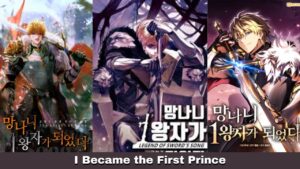
I Became the First Prince: Legend of Sword’s Song is a Korean fantasy web novel where Gruhorn—an ancient magic sword who spent centuries raising legendary heroes—accidentally possesses the body of Adrian, the kingdom’s despised fifteen-year-old First Prince, after the reckless royal stabs himself with the legendary blade. Now trapped in the body of a spoiled failure, this battle-hardened weapon must use his accumulated knowledge from training countless champions to restore a crumbling kingdom, win brutal wars against overwhelming odds, and prove that even a notorious good-for-nothing can become a legend when guided by four hundred years of combat experience.
It’s the kind of story that hooks readers who crave epic military fantasy with substance: a protagonist whose centuries of experience mentoring heroes translates into strategic brilliance rather than typical overpowered abilities, emotionally charged battles where comrades die and victories come at devastating cost, character development that transforms both the possessed prince and those around him from skeptics to believers, poetry-based power systems that add mythic weight to combat instead of generic magic spells, and a focus on kingdom-building and large-scale warfare that reads like fantasy military epics rather than solo power fantasy.
Where to Read I Became the First Prince Online
These are the main options:
Novel Updates and other aggregator sites
The web novel has been translated up to approximately 351 chapters across various platforms, though translation quality varies significantly between sources.
Manhwa adaptation
The manhwa adaptation titled “I Became the First Prince: Legend of Sword’s Song” (also known as “I Became the Rogue First Prince”) is actively serializing in 2026 with Chapter 21 released in early February 2026 on platforms like Asura Comics, Rolia Scan, and ManhuaUS.
Korean original
The original Korean web novel is titled 망나니 1왕자가 되었다 by author Glump, who previously wrote Dragon Poor and Dungeon Experience. The author has announced plans to officially publish the novel in four book volumes with revisions to earlier chapters.
What I Became the First Prince Is Really About
At its core, this is an epic tale of redemption and warfare where an ancient sentient sword—having spent four centuries as a kingmaker who trained legendary warriors—must navigate court politics, restore military strength, and lead desperate battles against monstrous invasions while trapped in the reviled body of a prince everyone expects to fail.
The protagonist Gruhorn isn’t some naive youth stumbling into power. He’s a legendary weapon who fought alongside his original master to slay the White Dragon of the Frost Mountains and establish a kingdom, then spent centuries fulfilling his dying friend’s request to “take care of my descendants” by mentoring generations of heroes including the Great Knight known as the Undefeated, the Dragon Slayer who felled the Mad Dragon, and the Mercenary King. When Prince Adrian—a spoiled failure despised throughout the palace—recklessly stabs himself with the Dragon Slayer sword believing the legend would make him a hero, the prince’s soul is accidentally destroyed and Gruhorn finds himself possessing the body of his dead friend’s descendant.
The story unfolds in a medieval fantasy kingdom threatened on multiple fronts: the Northern Wall faces constant orc invasions numbering eighteen thousand strong across nine distinct corps, the kingdom has degraded significantly from its glorious past, corrupt nobles hoard resources while frontline soldiers starve, and the prince’s own uncle—a powerful military commander—openly works to prevent Adrian’s succession to the throne. Gruhorn must use his strategic knowledge and combat experience to transform from the kingdom’s greatest embarrassment into its salvation, all while hiding the truth that the real prince is dead.
This isn’t a power fantasy where accumulated experience translates to instant dominance. The story features a protagonist whose greatest assets are tactical brilliance and understanding of how to forge warriors rather than overwhelming personal strength, large-scale medieval warfare with detailed battle sequences showing the brutality of combat with cold weapons and the strategic complexity of siege defense, a poetry-based power system called “Dance Poetry” where characters recite poems that function as magical incantations to enhance abilities and weapons, realistic consequences where major characters die in battle and victories require genuine sacrifice rather than plot armor, and complex political maneuvering as Gruhorn must navigate court intrigue while his uncle actively works to sabotage him.
Why I Became the First Prince Stands Out
A lot of possession/reincarnation fantasies promise “experienced soul in young body uses knowledge to dominate.” I Became the First Prince earns its reputation differently—mostly through epic military storytelling, profound character relationships forged in war, and a protagonist whose centuries mentoring heroes matter more than personal power.
Unique possession premise with emotional weight
The core concept immediately distinguishes itself from typical reincarnation stories.
Instead of a modern person reincarnating, an ancient legendary sword with four hundred years of consciousness possesses a prince’s body after accidentally killing him. Gruhorn carries genuine guilt for destroying his friend’s descendant, creating internal conflict rather than simply celebrating a second chance at life. His promise to his original master—”Please take care of my descendants”—becomes tragically ironic since he killed one of them, driving his desperate need to restore the kingdom as atonement. The possession happens because Prince Adrian’s arrogant belief in legends led him to recklessly stab himself with a sentient weapon, showing how the “villain’s” own actions caused his demise rather than random chance.
Epic military fantasy with Game of Thrones-scale warfare
The battles and military campaigns feel weighty and consequential rather than simple power fantasy stomps.
Large-scale wars feature detailed strategic planning including troop movements, supply logistics, defensive fortifications, and the psychological toll on soldiers rather than just flashy individual combat. The Northern Wall arc against eighteen thousand orcs mirrors Game of Thrones’ Night’s Watch defending against overwhelming odds, complete with desperate last stands and pyrrhic victories. Graphic combat descriptions specify weapon impacts on body parts, convey the visceral brutality of medieval warfare, and never let readers forget that war means death even for named characters. The protagonist wins through superior tactics and troop training rather than personal power—he’s strong but not invincible, making strategic thinking essential.
Poetry as power creates mythic atmosphere
The “Dance Poetry” system transforms what could be generic magic into something that elevates the narrative’s tone.
Characters recite epic poems during battle that function as incantations to enhance abilities, strengthen weapons, or unleash special attacks—similar to how stories power characters in Omniscient Reader’s Viewpoint. The poems themselves carry narrative weight, often referencing historical events or legendary figures from the world’s mythology, creating layers of worldbuilding through the power system. Readers describe feeling invested and forming deeper connections with characters when new poems are recited, as they function both as power-ups and as storytelling devices. The archaic, elevated language when poems are spoken creates the feel of reading ancient legendary tales rather than typical light novel prose.
Profound character development and meaningful relationships
Both the protagonist and supporting cast undergo realistic transformations that feel earned.
Gruhorn begins arrogant and stuck in past glories, looking down on the “new ways” and barely giving thought to how the world changed during his centuries as a sword, but gradually recognizes his outdated thinking and adapts. His character development happens so naturally that readers don’t notice until reflecting on how much he’s changed from the beginning. Supporting characters aren’t decorations—they have depth, agency, and their interactions with Gruhorn and each other are described as “precious and fulfilling.” The story excels at showing how warriors bond through shared combat and sacrifice, with relationships between commanders and soldiers feeling genuine rather than tropey.
Doesn’t shy away from tragedy and loss
The narrative earns its emotional moments through genuine consequences.
Major characters die permanently in battle without resurrection or plot devices to undo their deaths, creating real stakes. Readers report crying “many, many times” while reading, particularly during the battle with the Warlord and the fight with Sigrun—described as the most intense and tragic sequences. The story conveys the struggles and pain of warfare effectively, making it “easy to sympathize with the characters because the feelings are conveyed very well.” Rather than glossing over the cost of victory, the narrative lingers on loss and how survivors process grief while continuing to fight.
The Weaknesses of I Became the First Prince
Despite its strengths, reader feedback reveals consistent pain points that can significantly impact enjoyment—especially for those with specific preferences regarding translation quality, pacing, and power system presentation.
Extremely rough translation in opening chapters
The English translation quality creates a significant barrier to entry for new readers.
The first 20 chapters feature “absolutely atrocious” translation with noticeable grammatical errors, awkward phrasing, and occasional misattribution of dialogue. Early chapters sometimes incorrectly label which character is speaking, requiring readers to infer from context who actually said specific lines. While readers familiar with machine-translated web novels may tolerate this, it creates a poor first impression for those accustomed to professional translations. The translation quality improves significantly after chapter 20-30, but many potential readers abandon the story before reaching the better-translated sections.
Slow opening with heavy groundwork laying
The first 30-40 chapters feel stagnant and lack the excitement that defines the story’s best arcs.
Early chapters focus on establishing characters, political dynamics, and world details without the “pushing force/exciting factor” that motivates readers to continue. The pacing makes the setup feel predictable and somewhat boring, with one reader forcing themselves to continue until chapter 38 when the story “gets more interesting.” Multiple reviews specifically warn that readers should push through to chapter 40 before judging the series, as “the author was merely laying all the groundwork.” This front-loaded exposition works against reader retention despite the payoff later.
Poetry power system is divisive
The Dance Poetry mechanic that some readers love actively annoys others.
Many readers find the poems extremely weird and skip reading them entirely when characters recite them during battle. The poems rarely rhyme, making them feel less like traditional poetry and more like prose incantations that break narrative flow. Readers need to consciously remind themselves the poems function like spell incantations in typical fantasy to accept their presence. Those who dislike the system describe it as their biggest complaint with an otherwise excellent story. However, this appears to be purely a matter of taste—other readers cite the poetry as what makes the story unique and emotionally resonant.
Point-of-view transitions are confusing
The narrative switches between first-person and third-person perspective irregularly, creating confusion.
The story shifts from first-person POV to third-person POV and back multiple times within single chapters, sometimes mid-scene without clear breaks. This inconsistency is particularly problematic in early chapters when readers aren’t yet familiar with characters and struggle to track whose perspective they’re reading. Better implementation would involve maintaining one POV per chapter and clearly labeling chapter titles with character names when perspective shifts. Readers do report getting used to the transitions eventually, but it remains a consistent structural weakness throughout.
Strategy takes backseat to champion battles
For a military fantasy, the tactical elements are less sophisticated than expected.
While battles feature some strategic planning, most victories ultimately come down to the protagonist or other powerful “champions” fighting on the frontlines and wiping out enemies through superior individual combat ability. Readers looking for intricate tactical maneuvering like in kingdom-building stories with complex strategic layers may find the approach relatively straightforward. The battles in the North become somewhat repetitive as they follow similar patterns. Readers rate the strategy elements around 3 out of 5, noting the action is great but the strategic depth is merely adequate rather than exceptional.
Rushed kingdom stabilization
The timeline for military campaigns feels premature given the kingdom’s weakened state.
The protagonist involves the kingdom in major wars and conflicts with the empire before fully stabilizing internal affairs or building adequate military strength. Readers note it would have made more sense to focus on internal reforms, resource consolidation, and thorough preparation before engaging in external conflicts. The premature warfare creates the impression of reactive crisis management rather than the calculated long-term planning expected from a centuries-old strategic mind. However, this may be an intentional narrative choice to maintain tension rather than a flaw.
I Became the First Prince Main Character — Gruhorn/Adrian
Gruhorn is introduced as an ancient sentient magic sword known as the Dragon Slayer who, four hundred years ago, fought alongside his master—a country boy from an unknown mountain village—to slay the White Dragon and end the era of absolute power held by the dragon. After his master became the founding king and died, Gruhorn accepted the final request to “take care of my descendants,” spending centuries mentoring generations of warriors including legendary figures like the Great Knight known as the Undefeated, the Dragon Slayer who felled the Mad Dragon, and the Mercenary King.
Now inhabiting the body of fifteen-year-old Prince Adrian—the kingdom’s despised First Prince known as a spoiled, violent good-for-nothing who flipped tables daily and terrorized palace staff—Gruhorn carries both immense combat knowledge and the guilt of accidentally killing his friend’s descendant when the foolish prince stabbed himself with the legendary blade.
As a protagonist, Gruhorn is battle-crazed and lives for war, having spent centuries as a weapon on countless battlefields where slaughter became his natural state. He’s described as “strong to the strong and weak to the weak”—capable of cruel ruthlessness in combat but also “terribly generous and caring” toward those he considers worthy. His initial arrogance stems from glorifying old ways while barely acknowledging how the world changed, but he undergoes gradual realistic character development as he recognizes his outdated thinking. He lacks common sense and compassion that normal humans possess because he lived as a sword for over a century, creating both humorous misunderstandings and genuine character flaws he must overcome.
His greatest strengths aren’t overwhelming personal power but rather his strategic brilliance cultivated through four hundred years of warfare, his ability to identify and nurture talent in others from decades of training legendary warriors, and his complete comfort with violence and battlefield brutality that lets him make ruthless decisions others hesitate over.
I Became the First Prince Characters Guide
These are the characters and factions that define I Became the First Prince’s core conflicts and relationships:
Uncle (The Commander)
The powerful military commander who serves as Adrian’s primary antagonist in the early story. He openly works to prevent Adrian’s succession to the throne, using his military authority to control palace affairs and humiliate the prince. After Adrian’s transformation, the uncle makes a wager: if Adrian can force him to acknowledge the prince’s worth within six months, the uncle will grant any wish and become Adrian’s guardian as Adrian’s mother requested; if Adrian fails, he must obey the uncle’s every command without protest. Their antagonistic relationship drives much of the political tension.
Prince Maximilian
Adrian’s younger brother who travels with him to Winter Castle and the Northern Wall. Initially skeptical of his transformed brother, Maximilian gradually witnesses Adrian’s strategic brilliance and combat capability firsthand. He serves as a viewpoint character for readers to see how those who knew the “old” Adrian react to the dramatic changes in the prince’s personality and competence.
Count Balahard
The elderly commander of Winter Castle on the Northern Wall who has fought for decades defending the kingdom against orc invasions. Despite the desperate situation at Winter Castle—including a recent breach of the gate itself that cost many lives—Count Balahard and his soldiers maintain high spirits and warmly welcome Adrian. His experience and dedication represent the kind of warrior Gruhorn respects.
Vincent
Count Balahard’s eldest son who serves as one of Winter Castle’s commanders. He provides intelligence briefings about the scale of the orcish threat, revealing that nine distinct orc corps totaling eighteen thousand enemies mass in the mountains preparing to assault the wall.
The Original Master (The Founder King)
Though long dead, Adrian’s ancestor—the country boy who wielded Gruhorn as a sword to slay the White Dragon and found the kingdom—appears in flashbacks and drives much of Gruhorn’s motivation through the dying request to protect his descendants. In the story’s climax, this legendary figure temporarily descends by borrowing the body of his descendant (the current king) to help fight the Black Dragon, ultimately thanking Adrian/Gruhorn for protecting the kingdom before passing on.
Jordan
A minor supporting character specifically cited by reviewers as their favorite character, though details about their role aren’t extensively covered in available summaries.
Antagonists of I Became the First Prince
The Orc Armies
The primary military threat facing the Northern Wall, consisting of nine distinct orc corps totaling approximately eighteen thousand warriors massing in the mountains. They’ve recently achieved a major breakthrough by breaching Winter Castle’s gate, marking a critical escalation that threatens the entire kingdom if not stopped.
The Empire
A larger political power that has degraded Adrian’s kingdom over time. The story involves escalating conflicts with this empire, though the protagonist engages in warfare with them perhaps prematurely before fully stabilizing the kingdom’s internal situation.
The Black Dragon
A major late-story antagonist that emerges “from the darkness” during the final battle at the imperial capital. This creature is powerful enough that it requires the intervention of the founder king’s spirit descending into his descendant’s body, leading the Royal Knights who once fought the White Dragon to defeat this new draconic threat.
The Warlord and Sigrun
Major antagonists whose battles with the protagonist are specifically cited as the most intense and tragic sequences in the story, both described as fights that made readers “cry hard”.
I Became the First Prince Quick Wiki (2026)
Korean title: 망나니 1왕자가 되었다
Alternate titles: I Became the First Prince, I Became the Rogue First Prince, I Became the Degenerate First Prince
Author: Glump (author of Dragon Poor and Dungeon Experience)
Start year: Approximately 2020-2021
Novel status: Ongoing with 320+ chapters translated into English; author announced plans for official publication in four book volumes with revisions
Manhwa status: Actively serializing in 2026 with Chapter 21 released in early February 2026
Where to read novel: Light Novel World, Novel Trust, and various aggregator sites
Where to read manhwa: Asura Comics, Rolia Scan, ManhuaUS
Core premise: Ancient sentient sword who spent 400 years training legendary heroes accidentally possesses the body of the kingdom’s despised First Prince after the reckless royal stabs himself with the blade
Genre tags: Possession, Fantasy, Kingdom Building, Military Fantasy, Medieval Warfare, Magic Sword, Character Development, Tragedy, Poetry-Based Powers, Strategic Combat
Rating: Highly praised by readers who finish the opening chapters, with particular acclaim for emotional depth and epic military storytelling
I Became the First Prince Review — Is It Worth Reading?
If you want an epic military fantasy with Game of Thrones-scale warfare and genuine emotional weight, a possession story where accumulated experience matters more than raw power, character development that transforms both protagonist and supporting cast, poetry-based powers that create mythic atmosphere, and battles with real consequences where major characters die permanently, then I Became the First Prince is absolutely worth pushing through its rough opening to experience. However, it’s not for everyone.
It delivers:
Unique possession premise where an ancient legendary sword mentors-turned-possessor carries genuine guilt for killing his friend’s descendant, creating emotional complexity beyond typical reincarnation stories
Epic military fantasy with detailed large-scale battles, strategic warfare, and visceral combat that readers compare to reading the Iliad including epic poems
Profound emotional resonance where readers report crying multiple times, particularly during tragic battles like those against the Warlord and Sigrun
Meaningful character development for both protagonist and supporting cast that feels natural and realistic rather than forced
No cheap victories as the story isn’t afraid to kill major characters and show the devastating cost of war
Strong later arcs starting around chapter 38-40 where the groundwork pays off with intense, compelling storytelling
But I Became the First Prince is not for everyone, due to:
Absolutely atrocious translation in the first 20 chapters with grammatical errors and awkward phrasing that improves later but creates a terrible first impression
Slow, stagnant opening chapters (approximately first 30-40) focused on groundwork that lacks the excitement defining later arcs, requiring patience to reach the payoff
Poetry power system that’s extremely divisive—many readers skip the poems entirely and find them weird, though others consider them the story’s best feature
Confusing POV transitions that switch between first and third person irregularly, particularly problematic in early chapters
Strategy elements rated only 3/5 as battles often resolve through champion-level individual combat rather than intricate tactical maneuvering
Rushed kingdom stabilization where the protagonist engages in major wars before fully preparing, which may frustrate readers expecting more careful long-term planning
If you need polished professional translation, immediate engaging openings, or dislike poetry in your fantasy combat, this will frustrate you despite its brilliant later content. However, readers who can tolerate rough machine translation and slow starts to reach epic military fantasy with genuine emotional depth will find this an underrated gem that deserves far more recognition—especially if you’re a fan of military-focused kingdom-building stories like Game of Thrones or epic fantasy like the Iliad. The consensus is clear: push through to chapter 40 before judging, because what comes after is genuinely special.
I Became the First Prince FAQ
What is I Became the First Prince about?
It’s a possession fantasy where Gruhorn—an ancient magic sword who spent 400 years training legendary heroes—accidentally possesses the body of Adrian, the kingdom’s despised fifteen-year-old First Prince, after the foolish royal stabs himself with the legendary blade, forcing the guilt-ridden sword to use centuries of strategic knowledge to restore a crumbling kingdom and lead desperate wars against overwhelming odds.
Is the translation quality good?
No, especially not in the beginning. The first 20 chapters feature “absolutely atrocious” translation with grammatical errors and awkward phrasing, though it improves significantly after chapter 20-30. Readers familiar with machine-translated web novels will tolerate it better than those expecting professional quality.
When does the I Became the First Prince get good?
Multiple readers specifically state the story becomes significantly more engaging around chapter 38-40 after the author finishes laying groundwork. The opening 30-40 chapters feel slow and predictable, but readers who push through report the payoff is worth it.
How is the protagonist different from typical OP MCs?
Gruhorn’s greatest strengths aren’t raw power but strategic brilliance from 400 years of warfare and his ability to train/identify talent from mentoring legendary heroes. He wins through tactics and superior troop training rather than overwhelming personal strength. He’s strong but not invincible, making strategic thinking essential.
Is there romance in I Became the First Prince?
The story has little to no romance, focusing instead on military campaigns, kingdom-building, character development through warfare, and the bonds formed between soldiers in combat. This is explicitly cited as one of the story’s strengths for readers who want plot-focused fantasy without romantic subplots.
How brutal are the battles?
Very. The story features graphic descriptions of weapon impacts on specific body parts, doesn’t shy away from showing the horrific cost of medieval warfare, permanently kills major characters without resurrection, and makes readers cry during particularly tragic battles. It’s closer to grimdark military fantasy than typical light novel combat.
What’s the deal with the poetry system in I Became the First Prince?
Characters recite epic poems called “Dance Poetry” during battle that function as magical incantations to enhance abilities and weapons, similar to how stories power characters in Omniscient Reader’s Viewpoint. The poems create mythic atmosphere and emotional investment, though they’re divisive—some readers love them while others skip them entirely.
Is the manhwa adaptation worth reading?
The manhwa is actively serializing in 2026 with Chapter 21 released in early February, making it very early in the story. Given the novel’s consensus that it doesn’t truly shine until chapter 38-40, the manhwa hasn’t yet reached the arcs readers consider the best.
How long is I Became the First Prince?
The Korean web novel is ongoing with 320+ chapters currently translated into English across various platforms. The author has announced plans to officially publish it in four book volumes with revisions to earlier chapters, suggesting significant length.
Is I Became the First Prince similar to any other stories?
Readers compare it to Game of Thrones for its Northern Wall defense arc and political intrigue, the Iliad for its epic poetry and battle descriptions, Omniscient Reader’s Viewpoint for its narrative-based power system, and military fantasy focused on kingdom-building and large-scale warfare rather than solo adventuring.