Synopsis: Earth lost the fight for survival in the BattleNet system and humanity now faces eradication. However, Seong Jihan is given another chance. He has returned three years into the past before BattleNet became a life-or-death game. With his knowledge of the future, he’s determined to become the strongest player. Will Jihan be able to change the fate of humanity? And more importantly, can he protect the ones he loves from those who want him to fail?
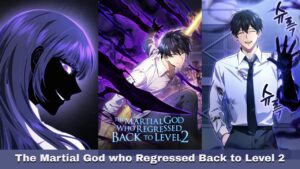
The Martial God who Regressed Back to Level 2 (also known as Martial God Regressed to Level 2) is a fast-paced regression story wrapped around Earth’s survival in a cosmic game system: Seong Jihan, Korea’s Martial Saint who watched humanity get deleted from the Space League, wakes up three years in the past with a second chance, knowledge of future disasters, and the cold determination to rewrite the timeline.
It’s the kind of story that hooks readers who want high-stakes worldbuilding over slow character development: constellation sponsorships, faction wars across alien races like the World Tree Alliance and the Kill the King faction, brutal power scaling, and enemies who genuinely threaten the MC—plus the constant tension of whether Jihan can actually prevent humanity’s extinction the second time around.
Where to Read The Martial God who Regressed Back to Level 2 (Official)
If you want legitimate platforms with consistent updates, these are the main options:
Tapas (English manhwa):
The Martial God Who Regressed Back to Level 2 is officially serialized on Tapas with updates every Tuesday. The manhwa adaptation is ongoing and provides a visually compelling version of the story for readers who prefer illustrated content over text.
WebNovel (English novel):
Available under the title “Martial God Regressed to Level 2” by author Zeom (염비/Yeombi). Translation quality may vary depending on the source, but WebNovel hosts the most accessible English version for novel readers.
Korean original:
The original Korean title is 2레벨로 회귀한 무신 by author Ah Nyunsung (염비/Yeombi). The novel is completed in Korean with 721 total chapters: Part 1 has 519 chapters, Part 2 has 152 chapters, and there are 50 side story chapters.
What The Martial God who Regressed Back to Level 2 Is Really About
At its core, this is a methodical survival climb inside a cosmic game that already decided humanity was worthless—and Jihan’s coming back to prove the system wrong.
Jihan isn’t returning to “make peace with his fate.” He’s coming back to rewrite Earth’s doomed timeline, survive a BattleNet League where humanity ranks dead last, and accumulate enough power (and strategic alliances) to systematically dismantle the alien factions and corrupted humans who orchestrated humanity’s extinction. The story is anchored in the Space League—a survival competition where twenty races fight for existence through PVP matches, dungeon raids, and constellation sponsorships—and the even larger power structure involving administrators, constellations (godlike beings), and universe-ending threats like the Martial God constellation.
And importantly: this isn’t a solo power trip where the MC effortlessly dominates. The story leans plot-forward over character-forward, Jihan doesn’t steamroll everyone just because he regressed, and the threats—particularly the World Tree Alliance, the Kill the King faction, and the constellation-hunting Martial God—scale in ways that keep major conflicts tense even when you know the protagonist will survive.
Why The Martial God who Regressed Back to Level 2 Stands Out (and what to watch out for)
A lot of regression fantasies promise “smart MC changes the future.” This one earns its momentum differently—mostly through well-executed action pacing, real opposition that forces Jihan to adapt, and a power fantasy that stays engaging instead of becoming repetitive filler.
Fast-paced action with solid worldbuilding
The story moves at a brisk clip with rarely a dull moment.
The BattleNet system creates a world structure built around the Space League, constellations who sponsor players, and inter-species conflicts (World Tree Alliance elves, Undead factions, Dragons, Uruks) that feel more expansive than “generic game apocalypse”. Each arc introduces new game mechanics, promotion matches, and strategic challenges that keep the narrative momentum high, and readers who appreciate fast progression without dragging arcs consistently praise the pacing.
Jihan faces genuinely strong opponents—and that changes fight dynamics
Jihan is powerful, but he still regularly faces opponents who push him to his limits.
Even when you know the story won’t kill him off, the fights carry tension because outcomes depend on strategy, timing, and leveraging his regression knowledge rather than “overpowered stats = auto-win”. Characters like Shizuru, the Sword King, and later constellation-level threats provide real resistance that makes victories feel earned instead of handed over.
Good humor, comedy, and dialogue
The story has genuinely funny moments and character interactions that land well.
This matters more than it sounds: many web novels lose personality in translation, but this one keeps enough natural banter and comedic timing intact that humor feels organic rather than forced. The balance between serious action and lighter moments prevents the tone from becoming monotonous.
Important side characters who contribute meaningfully
Unlike many solo-carry power fantasies, key supporting characters in this story actively matter to the plot.
Jihan’s niece Yoon Seah, the Shadow Queen (Ariel), Sophia from America First, and various constellation sponsors all play recurring, relevant roles rather than disappearing into the background after introduction. While the MC remains the clear focal point, the supporting cast feels fleshed out enough to avoid the “everyone else is useless” problem that plagues similar stories.
The Weaknesses Readers Keep Mentioning
Despite its strengths, reader feedback reveals consistent pain points that can significantly impact enjoyment—especially for those sensitive to specific content or pacing issues.
Nationalism and anti-Japan/China sentiment is pervasive
This is the most polarizing element: the story is unapologetically nationalistic, with Korea portrayed as heroic and Japan/China depicted as antagonistic, brainwashing villains.
The author explicitly makes us feel: “Korea is the best, Japan is evil, America is good but of course subservient to Korea”. While some readers can overlook this as typical Korean web novel tropes, others find it “so in your face” that it constantly intrudes on the main plot, with Japanese and Chinese characters making cartoonishly evil decisions in broad daylight. The story features a subplot where Japan brainwashes top Korean players into changing their nationality—and even after indisputable evidence goes public, the international community does nothing until the MC acts alone.
Streaming chat commentary fills chapters excessively
The novel overuses streaming/chat format where chunks of chapters consist of viewer reactions.
For example: “Look at this everyone… / Oh my god… praise 1 / Is this… rephrase 1 / No way… praise 2” is repeated across “EVERY CHAPTER”. For readers who enjoy chat-style reactions, this adds immersion; for others, it’s padding that slows the actual story and makes chapters feel repetitive.
Power scaling becomes inconsistent and rushed in later arcs
After approximately chapter 400, the power scaling “quickly gets out of hand”.
Powers are gained too quickly, merge with old skills only to be replaced at a rate that “prevents any of them from feeling important,” and stats/levels lose all meaning as Jihan approaches godhood. Originally foundational skills like the Achievement Store (which allows Jihan to upgrade his system) are never properly explained or become forgotten content by the endgame.
Supporting cast becomes increasingly useless
Despite strong characterization early on, the gap between Jihan and everyone else widens to the point where allies become “cheerleaders” rather than active participants.
The MC is OP enough to curb stomp all enemies by the later arcs, which removes much of the tension that made earlier fights engaging.
The ending feels anticlimactic and rushed
The final arcs are criticized for resolving major plot threads too quickly after hundreds of chapters of buildup.
Plot elements that were being set up—like the “Agents of the Apocalypse” and powerful endgame items—are either suddenly abandoned or conveniently forgotten by the conclusion. The Martial God, built up as the ultimate antagonist, is defeated through weakening tactics (corrupting his Martial Soul, isolating his servants, wearing down resources) rather than a climactic confrontation, leaving the resolution feeling “pathetic” compared to the threat level established.
The Martial God who Regressed Back to Level 2 Main Character — Seong Jihan
Seong Jihan is introduced as Korea’s Martial Saint, the rank 7 player in America First guild who witnesses humanity’s deletion from the Space League. Despite resisting the system deletion through his SSS-rank skill “Nameless Divine Arts,” he’s ultimately erased—only to regress three years into the past with full memories and a singular objective: prevent humanity’s extinction and take revenge on those who betrayed Earth.
What to note isn’t “how cool Jihan is,” but how pragmatic, intelligent, and ruthlessly efficient he becomes. He’s smart, cunning, petty, quite sadistic, doesn’t hesitate to kill both in the game and real-life, and not naive. Unlike naive protagonists who trust enemies or make illogical mercy plays, Jihan stays true to his goal throughout the story. However, he’s cold-hearted but not emotionless—he shows genuine care for his niece Yoon Seah and makes decisions prioritizing her safety even when it complicates his plans.
The Martial God who Regressed Back to Level 2 Characters Guide
These are the characters and factions that define the story’s core conflicts:
Yoon Seah (Jihan’s Niece)
Daughter of the Sword King and Jihan’s niece who was abandoned after her father was brainwashed by Ito Shizuru. She possesses the “Late Bloomer” gift, allowing her to play BattleNet twice per day, which accelerates her growth despite starting weaker than other players. Seah is one of the few consistently important side characters throughout the entire story.
The Shadow Queen (Ariel)
A dark elf constellation who becomes Jihan’s sponsor and eventual ally. She seeks to counter the World Tree Alliance, her mortal enemies, and provides crucial support and knowledge about the constellation system.
Sophia
A member of America First guild with severe “warrior mania” who develops interest in Jihan after he repeatedly protects her in battles. She represents one of Jihan’s connections to international players outside Korea.
The Sword King
Yoon Seah’s father and initially one of Korea’s strongest awakened, who was brainwashed by Japan and forced to change his nationality. In Jihan’s original timeline, he remained a traitor; in the new timeline, Jihan works to restore his memories and turn him back into an ally.
Ito Shizuru
A Japanese antagonist who brainwashed the Sword King. She’s described as one of the few opponents who “actually pushed MC” and created real tension during her arc.
Dongbangsak
The true creator and owner of Martial Soul who was enslaved by the Martial God. Jihan eventually frees him, and Dongbangsak helps corrupt the Martial Soul to weaken the Martial God in the final confrontation.
Antagonists: Constellations and Alien Factions
The Martial God
The primary antagonist—a constellation-hunting constellation who steals powers from other constellations and has been infinitely regressing himself to become stronger. The Martial God manipulated Earth’s timeline and is revealed to be behind much of humanity’s suffering.
World Tree Alliance
An alliance of elf planets that dominated Earth in the original timeline, taking all top five positions in the Space League. They train elves as “battle machines” and view planets like Earth as targets for conquest.
Kill the King (Undead Alliance)
A massive undead faction from space responsible for “clean-up” operations on low-ranking planets. They held significant responsibility for Earth’s doom in the original timeline.
Administrators
BattleNet is governed by color-coded Administrators (Red, Green, White, Black, Blue) who oversee the system. The Second White Administrator is revealed to have manipulated Jihan’s regression alongside the Martial God’s own regression loop.
Quick Wiki (2025)
Korean title: 2레벨로 회귀한 무신
Author: 염비 (Yeombi / Ah Nyunsung)
Original platform status: Completed with 721 total chapters
-
Part 1: 519 chapters (Completed)
-
Part 2: 152 chapters (Completed)
-
Side Stories: 50 chapters (Completed)
Manhwa (Tapas): Ongoing; updates every Tuesday
English novel: Available on WebNovel and aggregator sites; translation quality varies
Regression timeline: Jihan returns three years into the past, before BattleNet became a life-or-death game
Genre tags: Regression, System, Game Elements, Constellations, Level System, Overpowered Protagonist, Nationalism, Martial Arts, Sci-fi, Apocalypse
The Martial God who Regressed Back to Level 2 Review — Is It Worth Reading?
If you want fast-paced action with solid worldbuilding around the Space League system, a regression MC who actually faces challenging opponents, and a power fantasy that balances humor with high-stakes survival, then The Martial God who Regressed Back to Level 2 is definitely something to check out once. However, it’s not for everyone.
It delivers:
-
Brisk pacing with rarely a dull moment and well-executed action scenes
-
Real tension in fights because opponents scale appropriately and push Jihan strategically
-
Good humor and dialogue that maintains personality through translation
-
Important side characters who contribute meaningfully rather than becoming irrelevant
-
Unique worldbuilding with constellation sponsorships, alien factions, and the BattleNet system
But it’s not for everyone, due to:
-
Heavy, in-your-face nationalism with anti-Japan/China sentiment that constantly intrudes on the plot
-
Excessive streaming chat commentary filling chapters with repetitive viewer reactions
-
Power scaling becoming inconsistent and rushed after chapter 400, with skills losing meaning
-
Supporting cast becoming increasingly useless as Jihan’s power gap widens
-
An anticlimactic, rushed ending that undermines hundreds of chapters of buildup
-
Minimal romance elements throughout the story
If your tolerance for nationalist themes is low, or if you need consistent power scaling and strong character development beyond the protagonist, this can become frustrating despite its strengths. However, readers who can overlook these issues or enjoy typical Korean power fantasy tropes will find an entertaining, addictive read with satisfying action and strategic battles.
The Martial God who Regressed Back to Level 2 FAQ
What is The Martial God who Regressed Back to Level 2 about?
It’s a regression story where Martial Saint Seong Jihan, after watching humanity get deleted from the Space League, returns three years into the past to prevent Earth’s extinction and take revenge on those who ruined his original timeline.
Is The Martial God who Regressed Back to Level 2 a romance/harem?
No, the story contains no significant romantic elements. The focus remains on survival, power scaling, and preventing humanity’s extinction rather than romantic relationships.
Is Seong Jihan an overpowered MC?
Yes, but he still faces opponents stronger than him that require strategy and timing to defeat, which keeps fights tense. However, by later arcs (after chapter 400), the power gap becomes so large that tension decreases significantly.
How much nationalism is in the story?
Very high levels that many readers find intrusive. Korea is portrayed heroically while Japan and China are depicted as antagonistic, and this theme recurs throughout the entire story.
Does the story have excessive streaming/chat content?
Yes—a common complaint is that viewer chat reactions fill significant portions of chapters, sometimes back-to-back, which some readers find repetitive and excessive.
How long is The Martial God who Regressed Back to Level 2?
The Korean novel is completed at 721 chapters total (519 main story Part 1, 152 Part 2, 50 side stories). The English manhwa is ongoing on Tapas.
Should I read the novel or manhwa?
The manhwa is still ongoing and early in the story; if you want the complete narrative and can tolerate weaker later arcs plus heavy chat content, the novel is finished. If you prefer visuals and don’t mind waiting, the manhwa provides a more polished experience for the early-to-mid story.