Synopsis: Choi Seong-un is the top-ranked player in the game “Lost World,” being the only player to have completed all its achievements. However, his triumph is short-lived as a mysterious message transports him to the real “Lost World,” transforming him from a mere gamer to a contender for godhood. Amidst others vying for divinity, will Seong-un be able to achieve true godhood and reign supreme in this new realm?
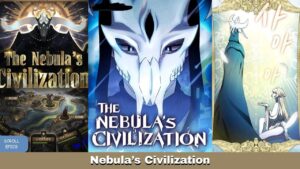
Nebula’s Civilization (also known as The Nebula’s Civilization or 슬기로운 문명생활 in Korean) is a kingdom-building fantasy that flips the god-game genre on its head: Choi Seong-un, known by his gaming alias Nebula, finds himself transported from being the number one player of a civilization-building game into the actual world behind that game, where he must nurture a struggling tribe of lizardmen from primitive survival to world-dominating empire—all while competing against other player-gods who control different races, navigating divine politics, and discovering that winning means more than just strategic dominance.
It’s the kind of story that hooks readers who crave intelligent empire-building over power fantasies: a protagonist whose greatest strength is strategic thinking and careful planning rather than overwhelming divine power, compelling side characters among the lizardmen civilization whose individual stories feel genuine and emotionally resonant, high-stakes competition where one wrong revelation or poorly timed intervention could doom an entire civilization, civilization progression that rewards long-term planning over quick fixes, and thought-provoking themes about divinity, free will, and the moral weight of playing god with sentient beings.
Where to Read Nebula’s Civilization Online
If you want legitimate platforms with accessible English translations, these are the main options:
Wuxiaworld (English novel):
Nebula’s Civilization is officially available on Wuxiaworld, translated by greenfrog and edited by HouseAu3, providing consistent translation quality for English readers.
WEBTOON (Manhwa status):
The manhwa adaptation of Nebula’s Civilization is officially serialized on WEBTOON, updating every Wednesday, with over 111 chapters available as of February 2026.
Korean original:
The original Korean web novel is titled 슬기로운 문명생활 by author wirae, published by Bluepic, and was completed in 2024 with 322 total chapters.
What Nebula’s Civilization Is Really About
At its core, this is a strategic empire-building story where a master gamer must apply his knowledge to nurture a primitive civilization from the Bronze Age to technological dominance, all while navigating the restrictions of being a new god with limited divine power and competing against 31 other player-gods for the ultimate prize of true divinity.
The protagonist of Nebula’s Civilization novel, Choi Seong-un (known as Nebula), isn’t trying to micromanage every detail or force his civilization down a predetermined path. He’s a strategic thinker who achieved rank one in “Lost World” not through brute force strategies but through understanding counter-builds, long-term planning, and adapting to changing metas.
When he and 31 other top-ranked players are transported to the real world behind the game by a mysterious entity named Aldin, they’re told they must compete to become the sole god of this world—and that only by achieving complete dominance can they have their wishes fulfilled and return home.
The story is anchored in Avartin, a fantasy world abandoned by its old gods, where the new player-gods must each nurture different races and civilizations—from humans to orcs to dwarves to insects—with Nebula choosing to guide a small, struggling tribe of lizardmen.
Organizations and factions emerge as civilizations develop, divine politics become increasingly complex as player-gods form alliances and rivalries, and Nebula must balance direct intervention (which costs limited divine power called Faith) against allowing his followers to develop independently and make their own mistakes.
This isn’t a power fantasy where the MC effortlessly dominates everyone. The story features a protagonist whose power is severely limited by Faith restrictions, forcing him to carefully ration divine interventions and rely on clever planning rather than overwhelming miracles.
Enemies genuinely threaten him because other player-gods have different strategic approaches and civilizational advantages that counter his own. Character dynamics shine through followers like Lakrak, the wounded lizardman who becomes Nebula’s first priest and whose personal journey from outcast to spiritual leader feels genuinely earned.
The story explores meaningful themes about the moral weight of playing god with sentient beings who can reject divine influence and make their own choices.
Why Nebula’s Civilization Stands Out
A lot of kingdom-building fantasies promise “strategic MC builds empire.” Nebula’s Civilization earns its reputation differently—mostly through its ensemble cast approach, morally complex questions about divinity, and a protagonist whose limitations create genuine tension instead of easy victories.
Unique subversion of god-game tropes
The core premise immediately sets itself apart from typical isekai or kingdom-building stories.
Instead of an overpowered protagonist who directly intervenes in every crisis, Nebula operates under severe divine restrictions that limit how often and how directly he can help his followers. The lizardmen and other followers can reject his guidance or misinterpret his revelations, adding unpredictability since they’re not mindless NPCs but sentient beings with their own agency.
The competition structure with 32 player-gods creates strategic depth where direct military conflict is only one path to victory, and alliances, diplomacy, and long-term planning matter as much as battlefield dominance. Nebula’s greatest advantage is his meta-knowledge from mastering the game, but the real world doesn’t follow game mechanics exactly, forcing him to adapt strategies on the fly.
Ensemble cast that makes you care
Nebula is technically the protagonist, but the story dedicates significant attention to the lizardmen and other characters, making their individual journeys feel as important as the divine competition.
Lakrak starts as a wounded outcast lizardman who earns his tribe’s respect through bravery, becomes the first to recognize the Beetle God (Nebula’s initial form), and evolves into the spiritual leader whose faith anchors the entire civilization.
The Black Scaled Lizardmen Tribe grows from primitive survival clan to the Black Scale Kingdom to eventually the Black Scale Empire that dominates the world, with individual lizardmen receiving character development that makes readers invested in their successes and mourn their deaths.
The story never truly forgets characters even after they die, with their legacies continuing to impact future generations in ways that feel emotionally resonant rather than contrived. Supporting protagonists receive as much narrative attention as Nebula himself, creating a genuine ensemble cast rather than a single overpowered MC with forgettable side characters.
Phenomenal world-building and strategic depth
The civilization progression feels earned rather than rushed, rewarding long-term planning over quick power-ups.
The technological advancement spans from Bronze Age survival through discovery of metallurgy, agriculture, writing systems, gunpowder, and eventually modern technology, with each stage presenting unique challenges.
Political and strategic elements are well-developed, showing how different civilizations with different racial advantages (orc strength, human adaptability, dwarven craftsmanship) create genuinely different strategic approaches.
Divine politics among the 32 player-gods add layers of complexity beyond simple military conflict, with alliances forming and breaking as civilizations rise and fall. The meta-game elements from the original “Lost World” game inform strategy without making everything predictable, since real-world implementation always introduces unexpected variables.
Thought-provoking themes about divinity
The story explores meaningful philosophical questions without becoming preachy.
Questions about free will versus divine guidance emerge naturally as lizardmen followers sometimes reject Nebula’s revelations or interpret them in unexpected ways. The moral weight of playing god with sentient beings creates genuine tension, especially when Nebula must choose between intervening to save lives and allowing his followers to face consequences of their choices.
The nature of faith and worship is examined through how different civilizations relate to their gods, from blind devotion to skeptical pragmatism to outright rejection. The danger of divine interference is shown through how direct miracles can create dependency rather than growth, forcing Nebula to carefully balance help with allowing independent development.
The Weaknesses of Nebula’s Civilization
Despite its strengths, reader feedback reveals consistent pain points that can significantly impact enjoyment—especially for those expecting consistent pacing throughout or uncomfortable with certain narrative choices.
Tone shifts from dark to lighter
The novel starts with life-or-death stakes that feel genuinely threatening but gradually loses that edge.
The beginning emphasizes that everyone is playing with their lives, giving a dark tone to the competition where failure means death or worse. However, in the middle of the story this dark tone is lost, with conflicts feeling more like a game played by bored children than desperate struggles for survival.
The adaptation to godhood happens too quickly for some readers, with human players seeming to disregard the lives of their followers as if they’re NPCs in a game rather than sentient beings. This tonal shift makes some readers feel the stakes diminished even though the competition technically remains life-or-death.
Rushed ending and underdeveloped late concepts
The story’s conclusion feels weaker than its strong opening and middle sections.
The last 60 or so chapters introduce too many new concepts and threats that weren’t properly built up, making the conclusion feel less satisfying than it could have been. The novel was originally planned to end at 300 chapters but required a detour for a smooth ending due to unusual circumstances during serialization, with the author compensating by publishing multiple episodes rapidly.
While the story has a complete ending (unlike many web novels), some readers feel it wraps up too quickly after investing in hundreds of chapters of careful build-up. The pacing feels rushed at times in the latter sections, with some plot threads feeling underdeveloped compared to the meticulous attention earlier arcs received.
Shift away from pure kingdom-building
The focus that made the early story compelling changes as the narrative progresses.
The initial kingdom-building focus that attracted many readers becomes less prominent in later parts of the novel as divine politics and player-god conflicts take center stage. Time skips become more frequent, causing readers to lose connection with characters they’ve grown attached to as generations pass in the lizardmen civilization.
The careful technological progression that made early arcs satisfying sometimes accelerates rapidly in later sections, with less attention to how specific innovations develop.
Moral discomfort with player-god treatment of followers
Some readers struggle with how the player-gods treat sentient beings.
The author explicitly shows that followers are not NPCs but beings with consciousness and personality, making it harder to accept when player-gods treat them callously. Players will ultimately escape after causing the deaths of hundreds of thousands of people in Avartin, with no apparent penalty for treating sentient beings as game pieces.
This creates moral discomfort for readers who become invested in the follower civilizations and find it disturbing that player-gods don’t treat their lives with appropriate weight. The story doesn’t fully resolve this tension between “it’s technically still a competition” and “these are real people whose lives matter,” leaving some readers feeling uneasy.
Nebula’s Civilization Main Character — Choi Seong-un (Nebula)
Choi Seong-un, known by his gaming alias Nebula, is introduced as the top-ranked player of “Lost World,” having achieved the unprecedented feat of completing every single game achievement and maintaining first place through his mastery of counter-building strategies and long-term planning.
Nebula is an intelligent, strategic thinker who excels even with severe power restrictions, never relying on overwhelming divine might but instead on careful planning and deep understanding of civilization development. He’s not arrogant despite his number one ranking and is willing to cooperate with other player-gods when it benefits his civilization, making him a genuinely likable character rather than an insufferable know-it-all. His greatest strength is his ability to think several steps ahead, understanding meta-strategies from the game while adapting to real-world variables that don’t follow game mechanics exactly.
His approach to godhood is hands-off compared to some other player-gods. Rather than micromanaging every aspect of his lizardmen followers’ lives, he provides guidance through carefully timed revelations and limited divine interventions, allowing them to develop independently and make their own choices—even when those choices lead to mistakes. This creates genuine tension since his followers can and do reject his guidance or misinterpret his will.
In the story, Nebula is known by many names and titles as his influence grows: Nameless Beetle God, Great Beetle God, Blue Insect God, White Spider God, Night Sky, The Devil, The One Who Stands Behind, The Ruler of Beings with Inverted Flesh and Bone, The Leader of the Pantheon, and The Returner Who Wields Forgotten Powers.
Nebula’s Civilization Characters Guide
These are the characters and factions that define Nebula’s Civilization’s core story:
Lakrak (The Wounded One)
The first major follower character and Nebula’s original priest. Lakrak starts as a wounded lizardman who faced a sabertooth tiger alone while his tribemates fled, saving many lives at the cost of severe injury. When mysterious beetle swarms appear and allow themselves to be caught easily (Nebula’s first divine intervention), Lakrak is the first to recognize this as a sign from a god. He becomes the spiritual foundation of the Black Scaled Lizardmen, the one whose faith and devotion anchor the entire civilization. His journey from outcast to respected leader to legendary priest spans multiple chapters and establishes the emotional core of the lizardmen storyline.
The Black Scaled Lizardmen
Nebula’s chosen followers, a small struggling tribe that grows into a civilization spanning continents. The tribe starts with primitive Bronze Age technology, barely surviving winters and predators in a harsh wilderness. Through Nebula’s limited guidance and their own ingenuity, they develop agriculture, metallurgy, writing systems, social structures, and eventually advanced technology. The civilization’s growth from Lakrak’s Clan to the Black Scaled Lizardmen Tribe to the Black Scale Kingdom to the Black Scale Empire that rules the entire world forms the backbone of the story. Individual lizardmen receive meaningful character development, with their personalities, struggles, and triumphs making readers genuinely invested in their civilization’s success.
The 32 Player-Gods (New Gods)
Originally humans from Earth who were top-ranked players in “Lost World,” they were transported to Avartin and made gods by the mysterious entity Aldin. Each player-god was assigned or chose a different race or species to guide—humans, orcs, dwarves, elves, insects, minerals, and various other options. The 32 compete for ultimate godhood, with victory going to whoever achieves dominance over Avartin through their civilization and alliances. Many player-gods formed the Pantheon, a loose alliance for mutual benefit, though betrayals and conflicts remain common. Each has different strategic approaches based on their race’s inherent advantages and their own gaming philosophies.
Aldin and the Old Gods
The mysterious entity who transported the players to Avartin and made them gods, setting up the competition for true divinity. The Old Gods are the original deities who abandoned Avartin before the player-gods arrived, leaving behind ruins of their civilizations and unanswered questions about why they departed. The relationship between Aldin, the Old Gods, and the true nature of the competition forms part of the story’s deeper mysteries.
Antagonists of Nebula’s Civilization
The story’s conflicts come from multiple sources rather than a single clear villain:
Rival Player-Gods
The other 31 player-gods competing for dominance create the primary conflicts. Some like the second-ranked player have different strategic philosophies that clash with Nebula’s approach—such as the Holy Orc meta strategy that dominated the game before Nebula found counter-builds. Five of the original 32 player slots were declined by humans and taken by “evil gods,” adding unpredictable threats to the competition. Different player-gods form alliances and rivalries based on their civilizations’ needs, with former allies becoming enemies as the competition intensifies.
Civilizational Conflicts
As different races and civilizations develop, natural conflicts emerge over resources, territory, and ideology. Wars between the lizardmen civilization and other races (like orcs, humans, or other species) provide military conflict beyond just divine scheming. The technological and magical advantages of different races create asymmetric warfare—humans might have firearms and artillery while orcs counter with magic, requiring clever strategic thinking rather than straightforward battles.
Nebula’s Civilization Quick Wiki (2026)
Korean title: 슬기로운 문명생활
Alternate titles: The Nebula’s Civilization, Nebula’s Civilization
Author: wirae
Original publisher: Bluepic
Start year: 2021 (novel), 2023 (manhwa)
Original platform status: Novel completed in 2024 with 322 chapters; Manhwa ongoing with 111+ chapters as of February 2026
English novel: Available on Wuxiaworld, translated by greenfrog, edited by HouseAu3
Manhwa platform: WEBTOON, updating every Wednesday
Core premise: Top-ranked player of civilization-building game is transported to the real world behind the game and must compete with 31 other player-gods to achieve true divinity by guiding a lizardmen civilization from primitive survival to world domination
Genre tags: Fantasy, Kingdom Building, Civilization Building, Empire Building, Strategy, God Protagonist, Ensemble Cast, Isekai, Competition
Rating: 4.5/5.0
Nebula’s Civilization Review — Is It Worth Reading?
If you want a unique civilization-building story with an intelligent protagonist who succeeds through strategy rather than overwhelming power, an ensemble cast of memorable followers whose individual stories matter as much as the divine competition, phenomenal world-building with careful attention to technological and social progression, meaningful themes exploring divinity, free will, and the moral weight of playing god, and a complete story with an actual ending (unlike many abandoned web novels), then Nebula’s Civilization is definitely worth giving a chance. However, it’s not for everyone.
It delivers:
Brilliant premise that distinguishes itself from typical isekai or kingdom-building stories by making the MC a limited god competing with 31 others rather than an overpowered hero
Intelligent protagonist who is genuinely likable despite being the best player, never arrogant, willing to cooperate, and succeeding through clever planning rather than plot armor
Ensemble cast approach where the lizardmen followers receive as much character development and narrative attention as the protagonist, making you genuinely care about their civilization
Phenomenal world-building with well-developed political and strategic elements, careful technological progression, and thought-provoking exploration of divine themes
Consistent storyline with satisfying final arcs that bring the competition to a complete conclusion
Strategic depth where every tiny detail matters and the pacing keeps you reading “just one more chapter” until 3 a.m.
But Nebula’s Civilization is not for everyone, due to:
Tone shift from dark life-or-death stakes to lighter “game played by bored children” feeling as the story progresses
Rushed ending where the last 60 or so chapters introduce too many new concepts without proper build-up, making the conclusion less satisfying than it could have been
Focus shift away from pure kingdom-building in later parts as divine politics take center stage, with time skips causing attachment loss to beloved characters
Moral discomfort with how player-gods treat sentient followers like game pieces, knowing they’ll escape without consequences after causing hundreds of thousands of deaths
Pacing inconsistencies where some sections feel rushed after hundreds of chapters of careful build-up
If you need consistent tone throughout, pure kingdom-building focus without divine politics, or complete moral resolution about the ethics of playing god, this may become frustrating despite its brilliant opening and middle sections. However, readers who enjoy strategic protagonists, ensemble cast storytelling, civilization progression from Bronze Age to modern times with magical realism, and can accept some tonal shifts will find an exceptionally unique and satisfying take on the kingdom-building genre—especially if you value complete stories with actual endings.
The first two-thirds of the novel are widely praised as excellent, with one of the final player battles being described as the peak of the entire story. If you’re willing to accept a slightly weaker (but still complete) ending, the journey is absolutely worth experiencing.
Nebula’s Civilization FAQ
What is Nebula’s Civilization about?
It’s a kingdom-building fantasy where Choi Seong-un (Nebula), the top-ranked player of the game “Lost World,” is transported to the real world behind the game and must compete with 31 other player-gods to achieve true divinity by guiding a primitive lizardmen tribe to world domination.
Is Nebula an overpowered protagonist?
No—his greatest strength is strategic intelligence and careful planning, not overwhelming divine power. He operates under severe Faith restrictions that limit how often and how directly he can intervene, forcing him to rely on clever long-term strategies and allowing his followers to develop independently rather than micromanaging everything.
Is there romance in Nebula’s Civilization?
The story focuses primarily on civilization-building, strategic competition, and the relationship between gods and followers rather than romance. There may be hints of understanding between certain characters, but romance is not a significant plot element.
How is the novel quality?
The first two-thirds (roughly first 200+ chapters) are widely praised as excellent with clever strategic depth, engaging ensemble cast, and phenomenal world-building. However, the last 60 or so chapters feel rushed with underdeveloped new concepts, making the ending less satisfying than the opening and middle sections—though it is complete.
Does the manhwa or novel have better quality?
As of February 2026, Manhwa is at 111+ chapters and the novel is completed at 322 chapters. The novel provides the complete story with more detail, while the manhwa offers excellent art and visual representation of the civilization-building elements. Readers who want the full story should read the novel, while those who prefer visual storytelling can enjoy the manhwa (which updates every Wednesday on WEBTOON).
Are the lizardmen followers important or just side characters?
The lizardmen followers receive as much narrative attention and character development as Nebula himself, making this genuinely an ensemble cast story rather than a single-protagonist tale. Characters like Lakrak have complete character arcs spanning multiple chapters, and readers become genuinely invested in the civilization’s success because individual lizardmen feel like real people rather than cardboard NPCs.
How long is Nebula’s Civilization?
The Korean novel is completed at 322 chapters. The manhwa adaptation is ongoing with over 111 chapters as of February 2026, updating every Wednesday on WEBTOON.
Should I read Nebula’s Civilization if I like empire-building stories?
Yes, with the caveat that the focus shifts somewhat away from pure kingdom-building in later sections toward divine politics and player-god conflicts. If you enjoy civilization progression from Bronze Age through technological development to modern times with magical realism, strategic depth over power fantasy, and ensemble cast storytelling, this is one of the best empire-building novels available.