Synopsis: Sejun, your average Seoul underdog, didn’t expect to grow tomatoes full-time when he stumbled into the mysterious dungeon full of monster quests and extravagant rewards. Yet, there he was, as a farmer growing and selling cash crops while clearing numerous quests that came his way. Will Sejun make it out of the dungeon with the plush rewards he hoped for? At least he has what it takes: optimism, resourcefulness, and a group of loyal furry friends.
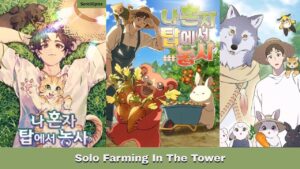
Solo Farming In The Tower (or The Top Dungeon Farmer) is a cozy farming-meets-dungeon-survival story where Park Sejun, an ordinary Seoul guy who stumbles into a mysterious tower hoping to strike it rich, gets stranded in a hidden area with nothing but seeds and sheer determination. Instead of fighting his way out like a typical hunter, he farms tomatoes, raises fluffy monster rabbits, befriends a merchant cat named Theo, and somehow turns agriculture into his survival strategy—all while Earth’s hunters battle deadly threats outside and a dragon administrator named Aileen watches over him from above.
It’s the kind of story that appeals to readers craving slice-of-life relaxation over constant combat: cute animal companions, cooking scenes, repetitive but oddly soothing farming loops, and a protagonist who solves world-ending crises by… growing better crops. But it’s also polarizing—some readers find the repetitive pacing, excessive status screens, s*avery elements, and power imbalance frustrating enough to drop it, while others embrace the fluffy escapism and binge hundreds of chapters without looking back.
Where to Read Solo Farming In The Tower Online
WEBTOON (English manhwa):
The Top Dungeon Farmer is officially serialized on WEBTOON with updates every Thursday. The manhwa adaptation is ongoing and provides a visually polished experience for readers who prefer illustrated content over text, though it’s still early in the story (around chapter 90+ as of late 2025).
Novel Updates (English novel):
Available under the title “Solo Farming In The Tower” with multiple English versions hosted by various translators. Translation quality varies significantly depending on the source—some versions are machine-translated, while others provide more polished chapters.
Korean original:
The original Korean title is 나 혼자 탑에서 농사 (Na Honja Tabeseo Nongsa). The novel is completed in Korean with 890 total chapters: Part 1 has 724 chapters, Part 2 has 161 chapters, and there are 5 side story chapters.
What Solo Farming In The Tower Is Really About
At its core, this is a slow-burn survival story disguised as a cozy farming simulator—Sejun isn’t trying to conquer the tower or become the strongest hunter; he’s just trying to not starve while accidentally becoming Earth’s most valuable resource through ridiculous crops that grant permanent stats, cure diseases, and solve apocalyptic locust invasions.
Sejun’s journey starts when he’s randomly invited into the tower (a mysterious dungeon filled with monsters, treasures, and floors that connect to Earth’s hunter system) and immediately gets trapped in a hidden farming area on floor 99 with no way out. What follows is hundreds of chapters of planting seeds, harvesting crops, unlocking increasingly absurd farming skills, feeding an ever-growing menagerie of monster companions, and inadvertently saving humanity from the outside while barely understanding what’s happening beyond his little farm.
The story balances two parallel narratives: Sejun’s isolated but surprisingly eventful daily life in the tower (rabbits breeding at alarming rates, Theo the cat scamming other merchants, Kuengi the bear eating everything in sight), and Earth’s hunter society struggling against tower-spawned disasters that Sejun unknowingly solves by selling miracle crops through Theo’s merchant network. The tension comes less from “will Sejun survive?” and more from “how will his next tomato accidentally prevent World War III?”
Why Solo Farming In The Tower Stands Out (and what readers complain about)
A lot of farming isekai novels promise “relaxing slice-of-life with cute companions.” This one delivers on that promise—but with enough execution issues that reader opinions split hard between “wholesome comfort food” and “frustratingly repetitive padding.”
Genuinely cozy atmosphere with adorable animal companions
The story commits fully to the farming-life fantasy with minimal violence and maximum fluff.
The monster rabbits (Moonfall and Moonlight) who start as Sejun’s first companions build an entire rabbit kingdom, Theo the merchant cat becomes Sejun’s clingy business partner who refuses to leave his leg, and Kuengi the gluttonous bear cub provides endless comedic moments through sheer appetite. For readers who want heartwarming found-family dynamics and low-stakes comfort reading, the animal interactions deliver consistent charm—though some find Theo’s constant face-slapping “jokes” and the bear’s food-stealing repetitive rather than endearing.
Creative farming mechanics integrated with tower survival
The tower’s system and Sejun’s farming class create unique problem-solving opportunities that feel fresh.
Instead of leveling up through combat, Sejun gains power by cultivating increasingly rare crops, unlocking farming-specific abilities (like gigantification to grow massive vegetables for the bear, or stat-boosting tomatoes that hunters desperately need), and using agricultural knowledge to counter tower threats. The farming itself becomes a strategic element—crop rotation affects quest completion, harvest timing influences outside events, and even seemingly mundane tasks like beekeeping or fishing unlock important story developments.
Aileen romance subplot provides emotional anchor
Unlike many pure farming stories, the developing relationship between Sejun and Aileen (the Black Tower’s dragon administrator) adds genuine emotional stakes.
Aileen starts as a sick, isolated dragon who can only observe Sejun through administrator screens and communicate indirectly. As she becomes healthier from eating Sejun’s crops and they develop mutual feelings, the story gains a slow-burn romance element that many readers find sweet—though the massive power gap creates recurring problems where Aileen literally almost kills Sejun by accident whenever they try to meet because she’s become too strong. The relationship progresses through creative workarounds (magic mirrors for communication, brief meetings in safe zones) that feel earned rather than handed over.
The Weaknesses That Make Readers Drop Solo Farming In The Tower
Despite its cozy appeal, reader feedback reveals consistent pain points that significantly impact enjoyment—especially for those sensitive to pacing issues or problematic content.
Repetitive status screens and farming descriptions fill excessive space
This is the most common complaint: “every chapter” includes detailed status updates, skill activation notifications, and repetitive farming sequences that pad word count without advancing plot.
The chapters are structured as “planted X seeds → X ability activates → gained +X xp, +X job xp, X skill increased slightly” repeated for multiple crops, sometimes taking up a third of the chapter before actual story progression happens. While some find this soothing routine, others consider it boring filler that makes binge-reading exhausting and slows an already glacial pace to a crawl.
S*avery mechanics are uncomfortable and poorly justified
The MC “actively ens*aves people” through contract magic, and the story treats this casually or even comedically rather than addressing the ethical implications.
Sejun uses magical contracts to bind companions and defeated enemies to his service—the narrative frames this as him gaining “loyal followers,” but the mechanics are explicitly described as ensavement where subjects can’t disobey orders. He even “fantasizes what he is gonna do after he ensaves them” before capturing new monsters. While some characters (like Theo and the rabbits) seem happy in their roles, the power dynamic remains deeply uncomfortable, especially when Sejun preaches about being a good person while simultaneously lying to and controlling others through magical contracts.
Power scaling becomes absurdly unbalanced
Despite the story emphasizing Sejun’s weakness, he somehow feeds “an endless hunger monster” (Kuengi) plus a growing village while maintaining zero resource scarcity.
The logistics never make sense: Sejun is supposedly weak and resource-limited, yet he cooks three meals daily for hundreds of monsters, has unlimited storage space (Kuengi hides in void storage that apparently fits giant creatures), and produces infinite stat-boosting crops that would realistically run out or require massive infrastructure.
Meanwhile, Aileen and other companions gain power so rapidly they become god-tier threats while Sejun remains “adorably weak”—creating the recurring comedy of him fainting from proximity to his own allies. The gap grows so extreme that supporting characters become cheerleaders rather than participants, and stakes disappear because someone always has the convenient power to solve problems.
Black-and-white morality makes conflicts predictable
The story operates on simplistic good/evil divisions: “Anyone who is friends/s*aves of Sejun = good and anyone who isn’t = bad and are pure evil/don’t have much of a brain.”
Antagonists are cartoonishly villainous with minimal depth or understandable motivations, which removes moral complexity and makes outcomes boringly predictable. Potential for interesting conflicts (like the minotaur king’s dilemma of being starved but honorable) gets immediately resolved through ens*avement rather than explored as genuine character development. The lack of morally gray situations or sympathetic antagonists flattens the narrative tension.
Romance develops through misunderstandings rather than genuine interaction
Aileen falls for Sejun because she pretty much misunderstands the MC and has just lived alone and locked up, not through meaningful relationship building.
The two barely communicate directly for massive stretches of the story—Aileen watches Sejun through screens and misinterprets his respectful behavior as romantic gestures, while Sejun remains oblivious to her feelings. When they finally meet and become a couple, it happens suddenly: the MC doesn’t even know who she was and thought everything was a dream. The relationship relies more on convenience and Aileen’s sheltered naivety than organic chemistry, leaving the romance feeling underdeveloped despite its importance to the plot.
Solo Farming In The Tower Main Character — Park Sejun
Park Sejun is introduced as an ordinary Seoul resident—no hunter abilities, no special talents, no survival skills—who accepts a tower invitation hoping for easy money and immediately gets trapped in an isolated farming zone on the 99th floor. What defines him isn’t strength or genius, but resourcefulness, optimism, and the ability to turn monotonous farming into a surprisingly effective survival strategy through sheer persistence and accidental brilliance.
He starts as a thankful, humble survivor grateful for any progress, but gradually his character becomes increasingly problematic as the story progresses. Despite learning his family is being targeted, Sejun shows surprisingly little urgency about reuniting with them or protecting them directly.
Solo Farming In The Tower Characters Guide
These are the characters and factions that define the story’s core dynamics:
Aileen (Black Tower Administrator)
A sick dragon who serves as the Black Tower’s administrator and can only observe Sejun through magical screens. She starts as a sheltered, lonely dragon whose illness prevents her from functioning properly as administrator, but eating Sejun’s crops gradually heals her and makes her stronger. Aileen develops feelings for Sejun through misunderstandings (mistaking his respectful behavior for romantic interest) and eventually becomes his girlfriend—though their power gap creates constant problems where she nearly kills him accidentally whenever they meet. She’s portrayed as a child through and through, selfishly asking for anything she wants with little understanding of compromise outside of love.
Theo (Wandering Merchant Cat)
A cat-folk traveling merchant who becomes Sejun’s first intelligent companion and “right-hand” business partner. Theo handles selling Sejun’s miracle crops to Earth’s hunters, creating the economic link that makes Sejun valuable to the outside world. He’s clingy, arrogant, full of himself, and prone to slapping Sejun’s face repeatedly—which some readers find funny but others consider tiresome. Theo becomes absurdly lucky and successful as a merchant through plot convenience rather than skill, eventually becoming “the fourth great wandering merchant”.
Kuengi (The Gluttonous Bear)
A baby bear with endless appetite who becomes Sejun’s companion. Kuengi’s defining trait is being constantly hungry. Despite this, Sejun somehow feeds him through gigantified crops and unlimited resources. The bear provides comedy through food obsession but also frustration when he eats power-boosting items meant for others, steals good food while giving Sejun only bitter leftovers, and creates repetitive “bear is hungry again” scenes that fill chapters without advancing plot.
Moonfall (Wolgang) and Moonlight (Wolha)
The first monster rabbits who approach Sejun’s farm, allured by his vegetable patch. This couple becomes Sejun’s loyal helpers and starts a rabbit family that rapidly expands into a rabbit kingdom with an army (despite rabbits not naturally having hierarchical monarchy structures). The rabbits represent the cooperative, wholesome side of Sejun’s found family, though they increasingly fade into background decoration as more powerful characters dominate screentime.
Earth Hunters and Outside World
Hunters on Earth struggle against tower-spawned disasters (like apocalyptic locust invasions) while unknowingly depending on Sejun’s miracle crops sold through Theo’s merchant network. This creates the parallel narrative where Sejun’s isolated farming accidentally prevents global catastrophes without him fully understanding his impact.
Quick Wiki (2025)
Korean title: 나 혼자 탑에서 농사 (Na Honja Tabeseo Nongsa)
Author: SDKnight (also listed as Soso in some translations)
Original platform status: Completed with 890 total chapters
-
Part 1: 724 chapters (Completed)
-
Part 2: 161 chapters (Completed)
-
Side Stories: 5 chapters (Completed)
Manhwa (WEBTOON): Ongoing; updates every Thursday
English novel: Available on Novel Updates and fan translation sites; translation quality varies
Main setting: Mysterious tower/dungeon system with 99+ floors; MC trapped in hidden farming area on floor 99
Genre tags: Slice of Life, Farming, LitRPG, System, Tower Climbing, Animal Companions, Dragon Romance, Comedy, Low Combat, Repetitive Pacing
Solo Farming In The Tower Review — Is It Worth Reading?
If you want extremely cozy, low-stakes farming escapism with adorable animal companions, creative agricultural problem-solving, and a slow-burn dragon romance that provides emotional anchor, Solo Farming In The Tower delivers consistent fluffy comfort reading that some readers binge for hundreds of chapters without stopping. However, it’s not for everyone.
It delivers:
-
Genuinely wholesome atmosphere with minimal violence and maximum cute animal interactions
-
Creative farming mechanics that integrate meaningfully with tower survival and Earth’s crisis
-
Sweet Aileen romance subplot that adds emotional stakes beyond pure slice-of-life
-
Completed story with 890 chapters available in Korean, so you know it reaches an ending
-
Relaxing, predictable story structure perfect for casual reading or falling asleep to
But it’s not for everyone, due to:
-
Excessively repetitive status screens, farming descriptions, and padding that fills chapters without advancing plot
-
Uncomfortable s*avery mechanics treated casually, with MC actively ens*aving companions through magical contracts
-
Power scaling becoming absurdly unbalanced (companions become gods while MC stays weak for comedy)
-
Black-and-white morality making conflicts predictable with cartoonishly evil antagonists
-
Romance developing through misunderstandings rather than genuine communication
-
Glacially slow pacing where it is freaking painfully slow and repetitive even for slice-of-life standards
-
Supporting characters (especially rabbits) fading into irrelevance as Theo and Kuengi dominate screentime
If you need consistent plot progression, morally complex characters, or can’t tolerate slavery elements even in fantasy contexts, this will frustrate you quickly. If you’re okay with turning your brain off and enjoying fluffy farming montages where a guy accidentally saves the world by growing magic tomatoes, you might join the readers who genuinely love it despite all the flaws.
Solo Farming In The Tower FAQ
What is Solo Farming In The Tower about?
It’s a cozy farming-survival story where Park Sejun gets trapped in a mysterious tower’s hidden farming area and survives by growing crops, befriending monster animals, and accidentally preventing Earth’s apocalypse through agriculture instead of combat.
Is Solo Farming In The Tower a romance/harem?
No harem—the story features a single slow-burn romance between Sejun and Aileen (the dragon administrator) that develops through misunderstandings and limited direct interaction but eventually becomes a confirmed relationship.
Is Park Sejun weak or overpowered?
Sejun remains physically weak throughout the story (repeatedly fainting from proximity to his powerful companions), but becomes strategically valuable through his unique farming abilities that produce miracle crops Earth desperately needs. The power imbalance is played for comedy but frustrates readers who want meaningful MC growth.
How much farming content vs. action/plot?
Approximately 50% farming descriptions and daily life, 50% plot involving Earth’s crises and tower mysteries. However, the farming portions include extensive repetitive status screens that some readers find soothing while others consider padding.
Does the story have problematic slavery elements?
Yes—Sejun actively uses magical contracts to ens*ave companions and defeated enemies, and the story treats this casually rather than addressing ethical implications. This is a dealbreaker for some readers who find it uncomfortable regardless of the characters seeming happy in their roles.
How long is Solo Farming In The Tower?
The Korean novel is completed at 890 chapters total (724 main story Part 1, 161 Part 2, 5 side stories). The English manhwa is ongoing on WEBTOON and still early in the adaptation (around chapter 90+).
Should I read the novel or manhwa?
The manhwa is beautifully illustrated and streamlines some repetitive elements, making it better for readers sensitive to padding—but it’s incomplete and updates weekly. The novel is finished and gives you the complete story, but includes all the repetitive status screens and slower pacing that drive some readers crazy. If you want cozy comfort reading to binge, try the novel; if you prefer polished visuals and don’t mind waiting, start with the manhwa.